
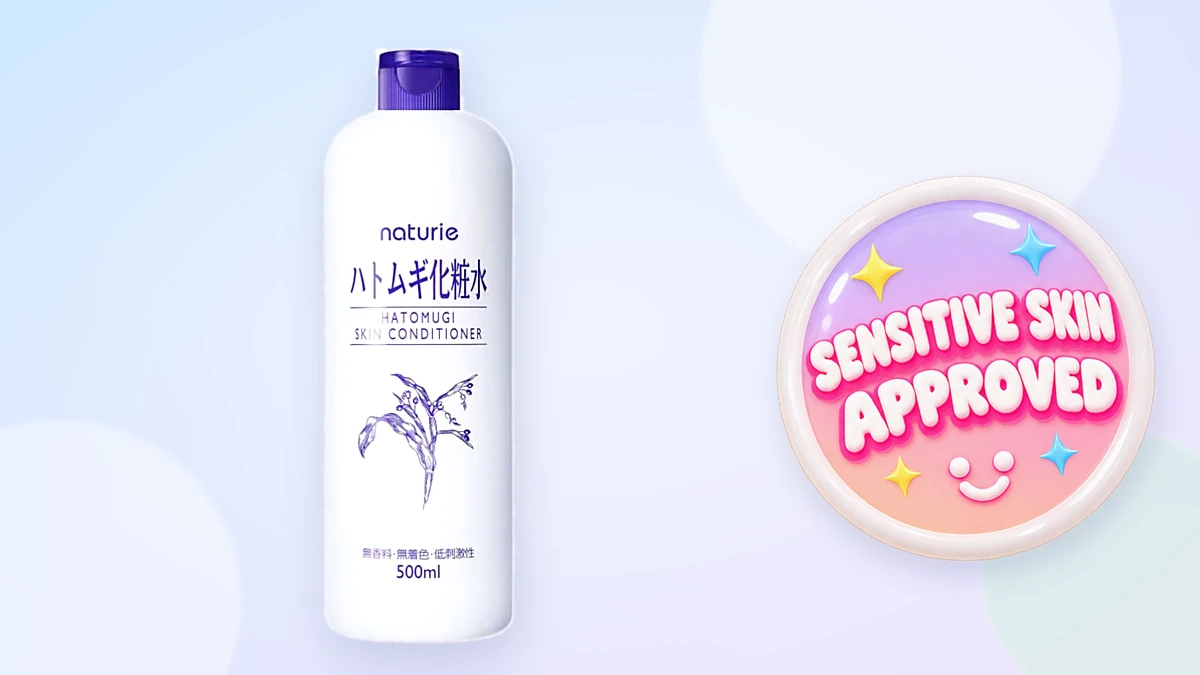
The same tear-shaped grain turns up in a Korean kids’ chewable, a Japanese pharmacy tablet and one of Japan’s best-selling toners.
Short answer:
- Hatomugi is the Japanese name for Job’s tears, called yulmu in Korea. The hulled seed sold as medicine is yokuinin.
- East Asian medicine has used it for centuries: Korea for “dampness” and tight muscles, Japanese folk healers for warts and rough skin.
- Today’s hatomugi toners are simple, cheap, watery moisturisers. Think hydration, not treatment.
Why do Korean parents give kids Job’s tears candy?
Korean pharmacies sell Job’s tears chewables for children, and shopping sites list them as children’s health foods, not medicines. I could not find them on Amazon US.
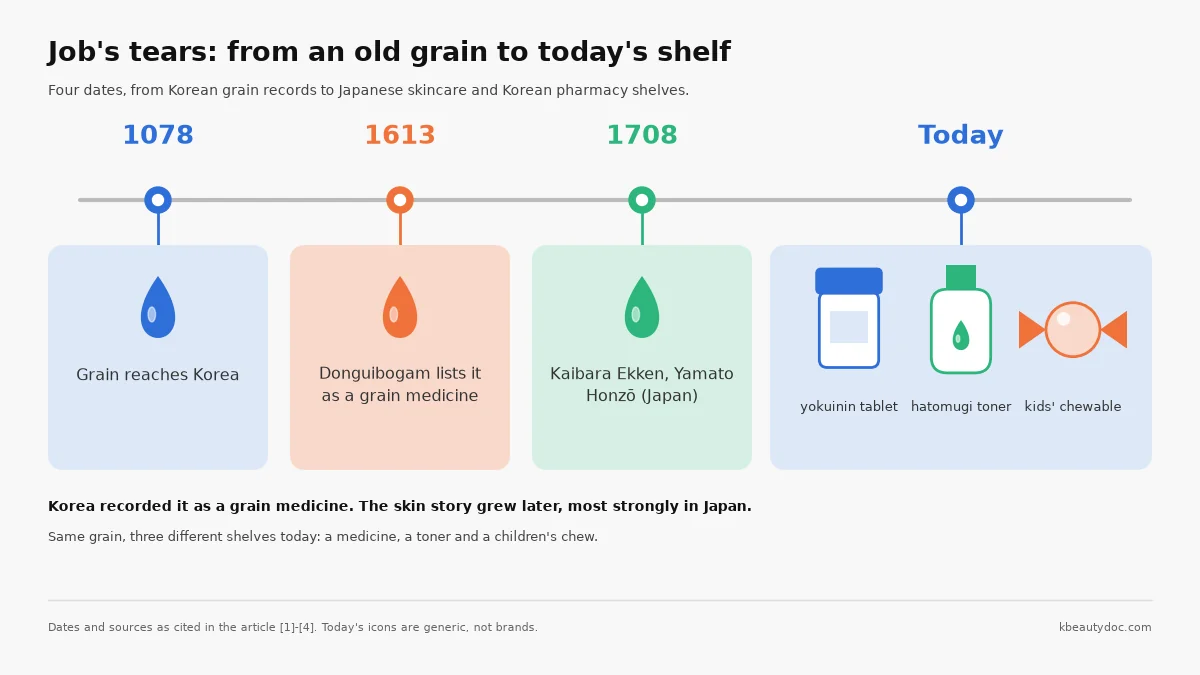
Parents usually ask me about them when a child has water warts (molluscum), small shiny bumps on the skin. The grain is old news here: one record dates its arrival from China to 1078 [1].
What does the Donguibogam say about Job’s tears?
The Donguibogam is Korea’s most famous medical book, written by royal physician Heo Jun and printed in 1613. UNESCO lists it as a Memory of the World [2].
Job’s tears sits in the grain section of its herbal chapter. The entry says, in my translation: “It treats coughing up pus from weak lungs, tight and cramping tendons from wind and damp, and both dry and wet beriberi” (an old name for weak, swollen legs) [3].
Notice what is missing: skin and warts. In Korean medicine, yulmu is mainly a grain that drains “dampness”. The skin story grew later, most strongly in Japan.
How did Japan link hatomugi to skin?
From old medicine books to today’s shelves.
**In 1708, the Edo-period doctor and herbalist Kaibara Ekken wrote about hatomugi in Yamato Honzō,** his book of Japan’s plants and medicines. Kracie, a Japanese herbal medicine maker, says the idea that hatomugi is good for rough skin and warts began when Ekken introduced it as a folk remedy [4].
In Japanese folk medicine it is still known as an ibo-tori, a “wart taker” [5]. Japanese over-the-counter yokuinin tablets list “warts and rough skin” on the label, label wording, not a promise.
Why are there so many hatomugi products in Japan?
Three reasons:
- A familiar name. A folk remedy since the Edo period.
- A simple recipe. Water, humectants and hatomugi extract.
- Big, cheap bottles. Some brands sell a full litre.
The best known is Naturie Hatomugi Skin Conditioner, which the maker launched in February 2002. Per the brand’s official site, it has been No. 1 in sales among self-service toners in Japan for 10 years in a row (Intage SRI+ data, 2015–2025).
Which hatomugi products can you buy in the US?
Want one big bottle of plain toner for face and body?
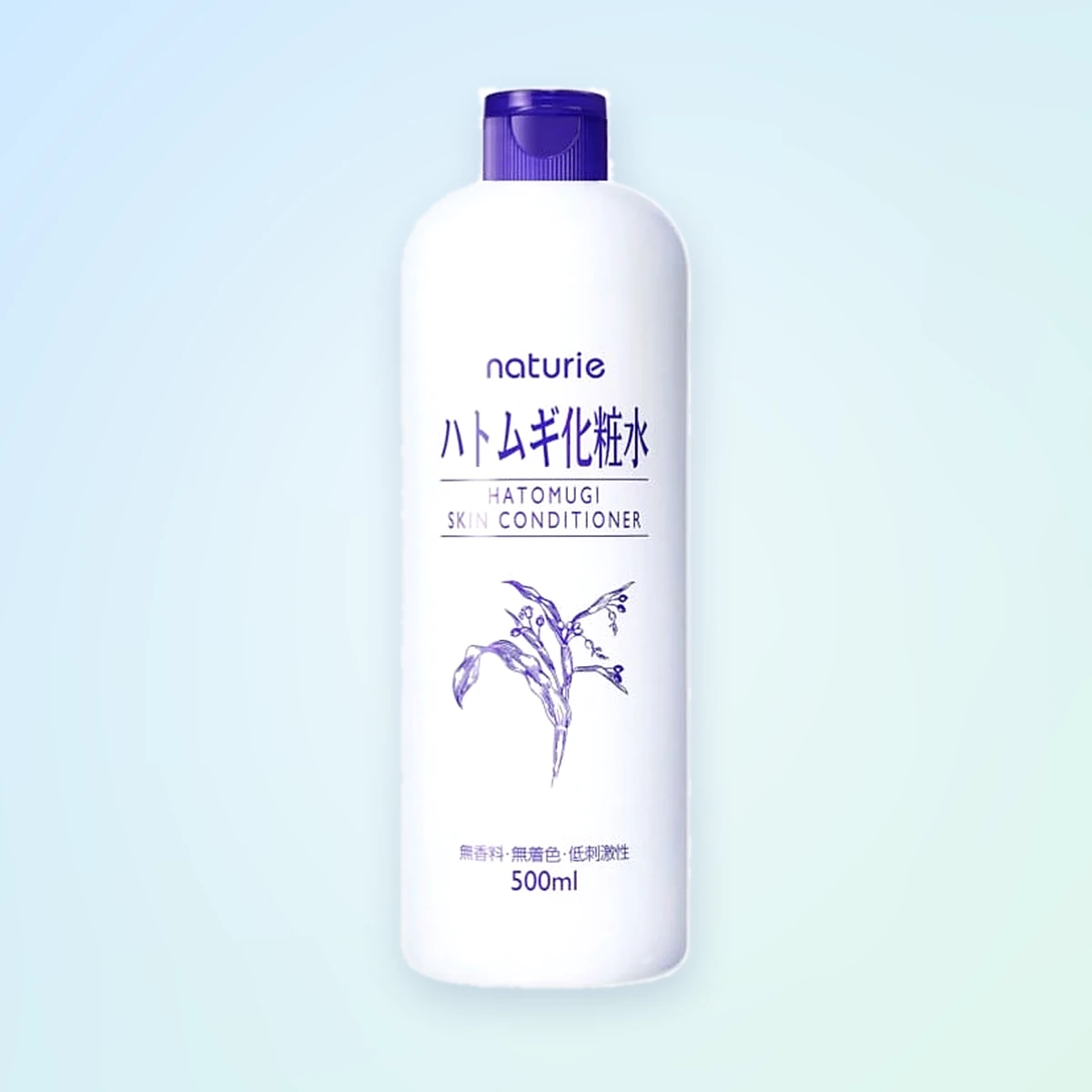
Photo: the maker’s official store.
The label is short: water, three humectants (DPG, BG, glycerin), hatomugi extract and dipotassium glycyrrhizate, a licorice-root calming ingredient. The brand says no fragrance, colour or alcohol.
A light, watery hydrator. Enough for oily skin; dry skin needs a cream on top.
Skin still feels tight after toner?
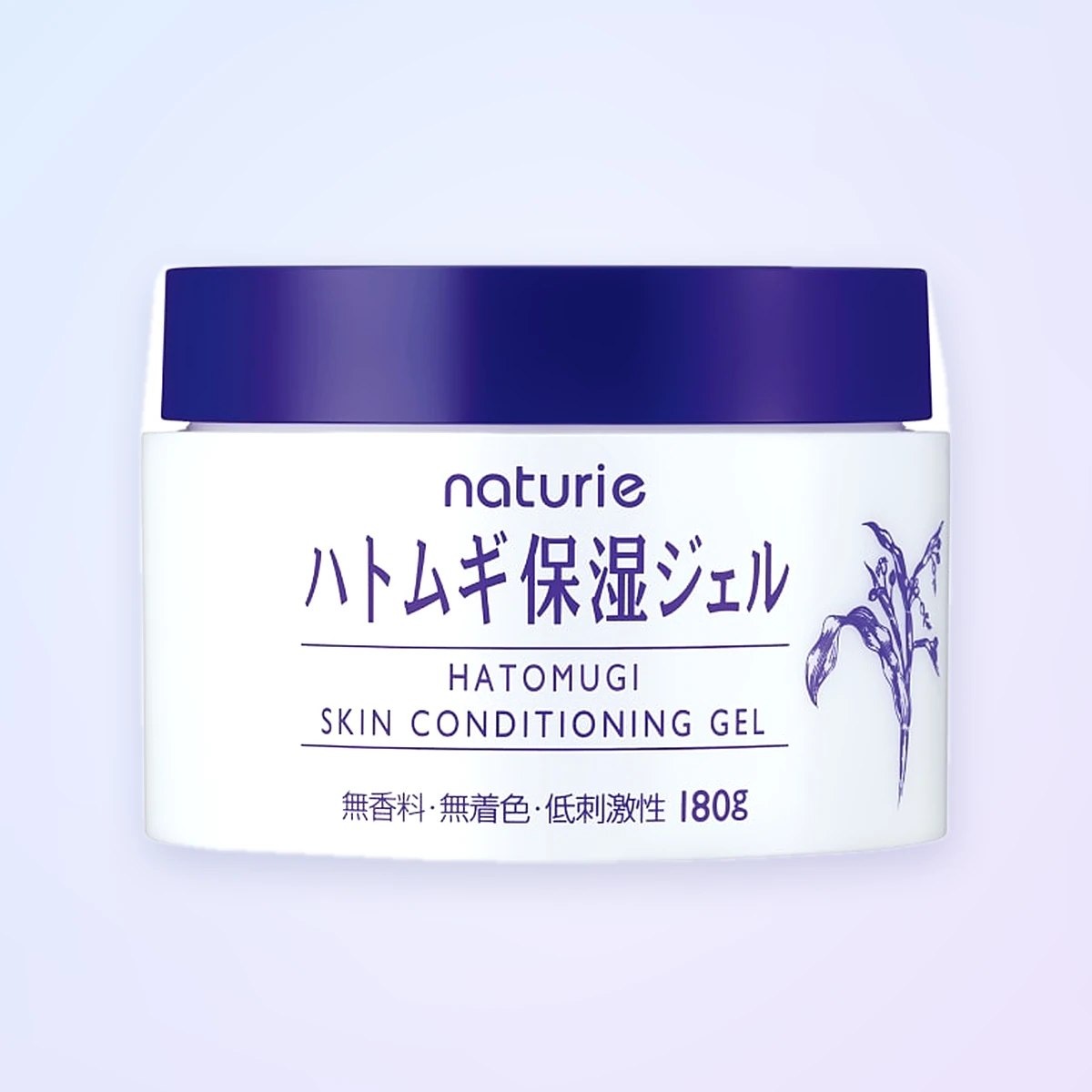
Photo: the maker’s official store.
Naturie makes no hatomugi cream; the gel is its moisturiser: water and glycerin set into a gel, with a little silicone and vitamin C and E derivatives.
Light enough for oily skin at night. Very dry skin needs a richer cream over it.
What I tell my patients
- A toner is a moisturiser, not a medicine. It will not clear bumps.
- New bumps on a child or adult deserve a doctor’s look first. Look-alike bumps can need different care.
- Use it after a gentle cleanser (foam cleanser guide). It is not an acid pad like those in my toner pad guide.
FAQ
What is hatomugi good for?
In skin care, hatomugi toners and gels are light moisturisers. In old Japanese folk medicine, the seed was used for warts and rough skin, and Japanese over-the-counter tablets still list those uses on the label. That is tradition and label wording, not proof.
Is hatomugi toner good for oily skin?
It can suit oily skin. The Naturie toner is watery, with no oils on the ingredient list, and the brand says it has been tested to be non-comedogenic. If your skin breaks out easily, try it on a small area first.
Can you use hatomugi while pregnant?
Avoid eating Job’s tears, including teas and supplements, during pregnancy; animal studies raised concerns about the womb [6]. I found no studies on hatomugi toner on the skin in pregnancy, so ask your own obstetrician.
As an Amazon Associate I earn from qualifying purchases. This article contains affiliate links: if you buy through them, I may earn a small commission at no extra cost to you. It does not change what I recommend.
References
- Korean Cultural Centers Federation, Regional N Culture. 율무 (Job’s tears). nculture.org
- UNESCO Memory of the World. Donguibogam: Principles and Practice of Eastern Medicine. unesco.org
- Heo Jun. Donguibogam (1613), Tangaek (herbal) chapter, grain section, entry 薏苡仁 (Job’s tears). English rendering by the author from the standard Korean translation.
- Kracie. 楊貴妃の愛した「ハトムギ」 (Hatomugi, loved by Yang Guifei). kracie.co.jp
- Pharmaceutical Society of Japan. 薬用植物:ハトムギ (Hatomugi), 2023. pharm.or.jp
- WebMD. Job’s Tears: uses, side effects and safety. webmd.com
Disclaimer: I write about cosmetics and shops based on clinical experience. Product mentions reflect my clinical opinion; availability and formulas change, so check the current label. Skin responds differently from person to person, so patch test anything new, and see a doctor about a skin condition.

14 years in practice · replies to messages herselfPhysician in non-surgical aesthetic medicine, practising in Ansan, South Korea. Every article here is written from clinical practice and the published literature.
About the author · Contact