
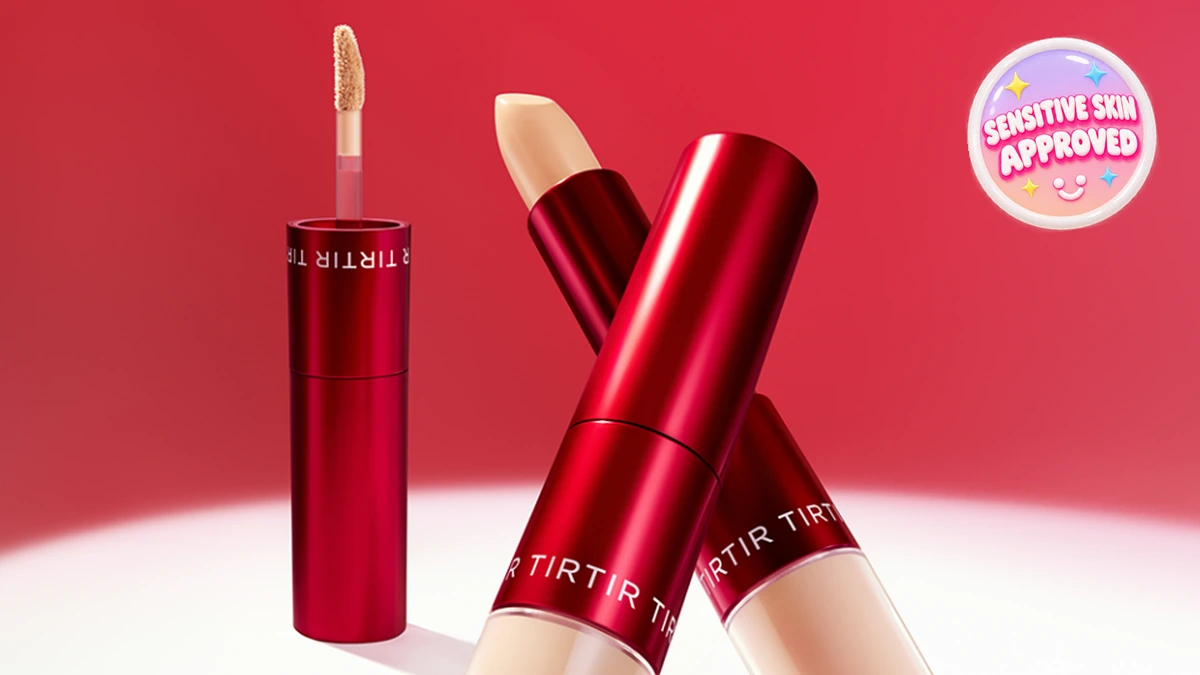
Most of a Korean “no-foundation” face is sunscreen. Concealer only goes where you would point and say, “that one.”
Short answer:
- Sunscreen first, full amount. With no foundation on top, it is doing all the UV work.
- Then concealer on spots only: a dark mark, redness beside the nose, the inner corner under the eye. Tap the edges, not the middle.
- Touch up by skin type: oily skin blots and powders; dry skin adds moisture first, then fixes. If your whole face needs evening out, this is not the method.
The verdict from Dr. Myung Yoo (kbeautydoc) — a doctor in Korea: For a foundation-free base, put on the full amount of SPF 30 or higher sunscreen first and use concealer only on the few spots you want hidden; if redness or uneven tone covers your whole face, a tinted sunscreen or cushion is the better base, because this method covers spots, not the face.
Why do Koreans skip foundation?
Some Korean women skip foundation for a bare-looking makeup. They spread a thin layer of concealer instead, for a light feel.
It also means fewer layers on the skin. In 539 Korean acne patients, 38.1% of those whose treatment had failed said makeup worsened their acne, against 26.3% of new patients; liquid foundation and concealer were both common in that group [2]. A link, not proof.
Why do I share this? If heaters or air conditioning make your skin feel dry, but you worry that moisturiser will wipe off your foundation, try this method too.
The steps below are general makeup practice, not study results.
What goes on before the concealer?
- Moisturiser, thin. Concealer slides on a heavy cream.
- Sunscreen, the full amount. In a Korean lab study, sunscreen and makeup each protected far less than their labels at real-life amounts; layered, they protected better [1]. Skip foundation and that top-up is gone.
- Wait until the sunscreen stops feeling wet.
Do you need a tinted sunscreen as the base?
Only if your tone is uneven over large areas. More in which Korean tinted sunscreens have iron oxides.
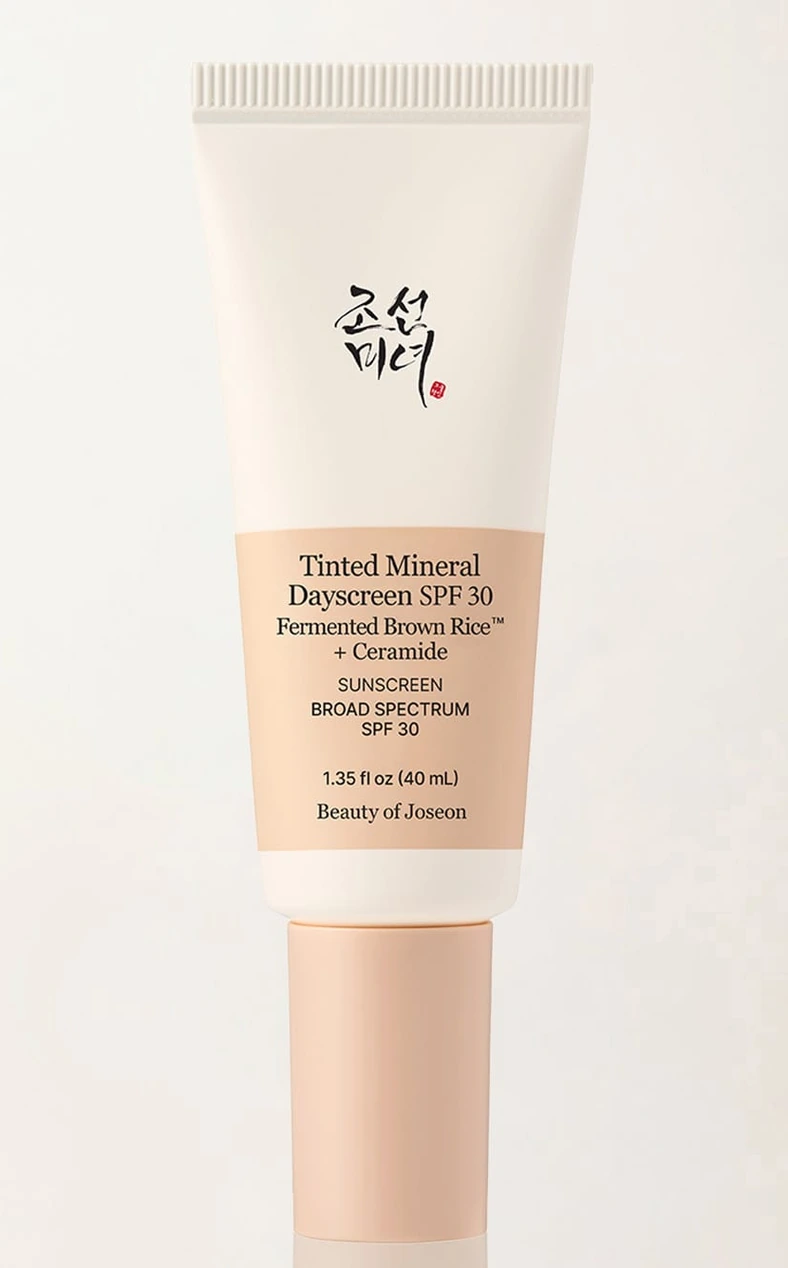
Photo: the brand’s official store.
The one I would use: Beauty of Joseon Tinted Mineral Dayscreen SPF 30, 15 shades, zinc oxide plus iron oxides and no fragrance listed, per the brand’s official site [4].
Beauty of Joseon Tinted Mineral Dayscreen at Jolse (ships worldwide from Korea)
Where do you put the concealer?
- Dark spots and old acne marks. One dot on each.
- Redness beside the nose and on the chin.
- Under the eye, inner corner only.
Leave the rest bare; that is what keeps it looking like skin.
What do you apply it with?
- Fingertip: presses it in. Good under the eye.
- Small brush: precise on a single spot.
- Damp sponge or puff: sheerest result, for wider redness.
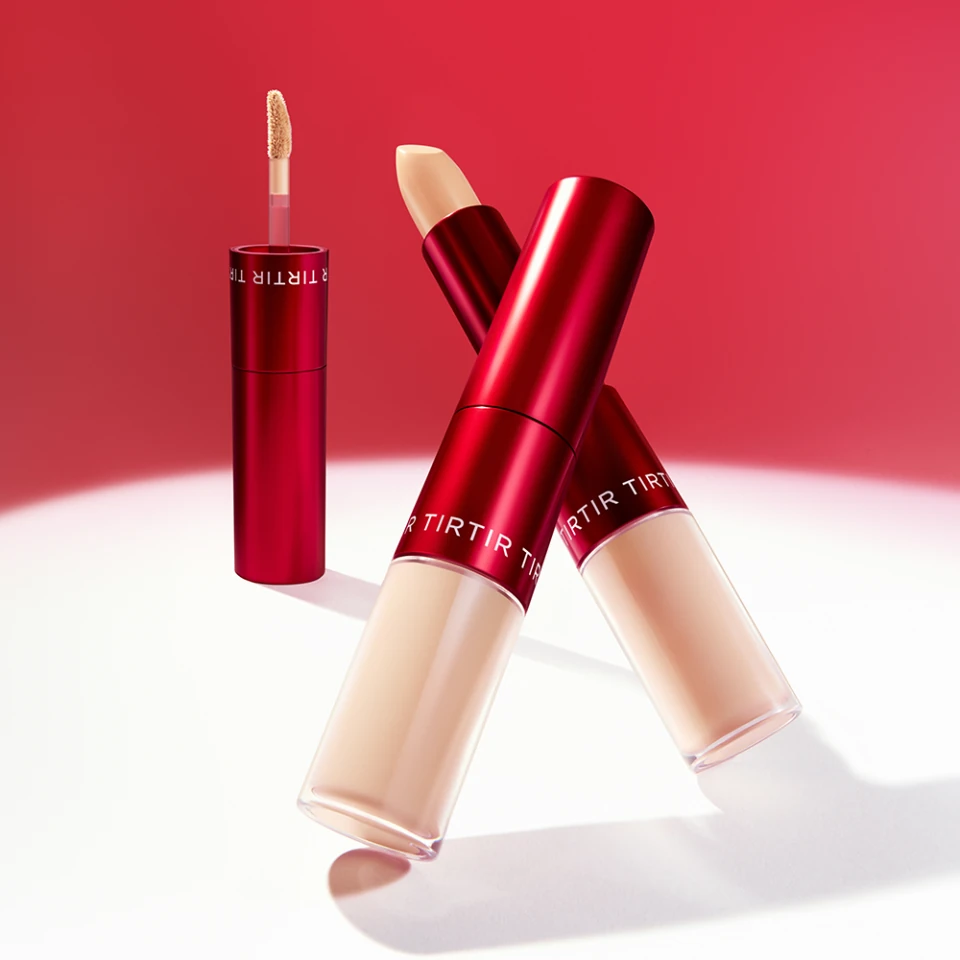
Photo: the brand’s official store.
A dual concealer makes the spot-versus-area split easy. TIRTIR Glide & Hide has a 4 g liquid end for small spots and a 4 g stick end for wider areas, per the brand’s official site; no fragrance appears in its 20 shade lists [5].
How do you blend the edges?
Tap around the edge, not the centre. Rubbing wipes off the concealer and the sunscreen under it.
How much is too much?
Start with a dot the size of a grain of rice per spot. If you can see a patch, use less; if you can still see the spot, add a second thin layer.
How do you set it and touch it up?
- Oily skin: press a little powder on the concealer and T-zone. To touch up, blot oil with a tissue first, then add a tiny dot; concealer on oil slides.
- Dry skin: skip the powder. When skin feels tight, add a little moisturiser or an essence mist, then fix the spot with a small dot.
- Sunscreen: reapply on long days outside; a cushion with SPF only tops it up.
How do you adjust it for your skin?
- Oily: thin moisturiser, powder on the concealer, blot before touch-ups.
- Dry: keep the cover light so you can add moisturiser on top during the day; concealer clings to flakes, so skip peeling patches.
- Breakout-prone: concealer is not automatically gentler than foundation [2].
- Bumps around the mouth: in one Australian study, foundation on top of moisturiser and night cream was linked to about 13 times the odds of perioral dermatitis [3]. Fewer products come first: can too many skincare products cause breakouts?
- Dry under-eyes: eye cream first, the thinnest liquid concealer, no powder.
What I tell my patients about a foundation-free base
General tips, not advice for your skin:
- Sunscreen is the base; concealer is the patch. Short on time? Choose sunscreen.
- The common mistake is covering the whole cheek. Then it is foundation again, only harder to blend.
- Save it for everyday days, not big events. It is good for a light look on the way to work or when you take your kids to and from school.
FAQ
Can I wear concealer without foundation?
Yes. Moisturiser and the full amount of sunscreen first, then concealer only on the spots you want covered, tapped at the edges.
Why does my concealer look cakey without foundation?
Usually too much product, oil underneath or dry flakes. Use a smaller dot; blot first if oily, add moisture first if dry.
Links to Jolse are affiliate links through Awin; I may earn a commission at no extra cost to you.
References
- Kim MA, Jung YC, Bae J, Ha J, Kim E. Layering sunscreen with facial makeup enhances its sun protection factor under real-use conditions. Skin Res Technol 2021;27(5):751-757. doi:10.1111/srt.13010 (PMID 33660348)
- Suh DH, Oh H, Lee SJ, Kim HJ, Ryu HJ. Relationship between acne and the use of cosmetics: results of a questionnaire study in 539 Korean individuals. J Cosmet Dermatol 2021;20(7):2172-2178. doi:10.1111/jocd.13853 (PMID 33206430)
- Malik R, Quirk CJ. Topical applications and perioral dermatitis. Australas J Dermatol 2000;41(1):34-38. doi:10.1046/j.1440-0960.2000.00385.x (PMID 10715898)
- Beauty of Joseon. Tinted Mineral Dayscreen SPF 30, product page and full ingredient list by shade. Accessed 2026-10-31.
- TIRTIR. Glide & Hide Blurring Concealer, official Korean product page (product information and full ingredient list by shade) and official global store. Accessed 2026-11-08.
Disclaimer: I write about cosmetics and shops based on clinical experience. Product mentions reflect my clinical opinion; availability and formulas change, so check the current label. Skin responds differently from person to person, so patch test anything new, and see a doctor about a skin condition.

15 years in practice · replies to messages herselfA doctor in Korea, in practice since 2012 — your K-Beauty Doc. Physician in non-surgical aesthetic medicine, practising in Ansan, South Korea. Every article here is written from clinical practice and the published literature. Not medical advice.
About the author · Contact