The short answer
A cushion is a sunscreen you dab on with a sponge, and almost nobody buys one that way.
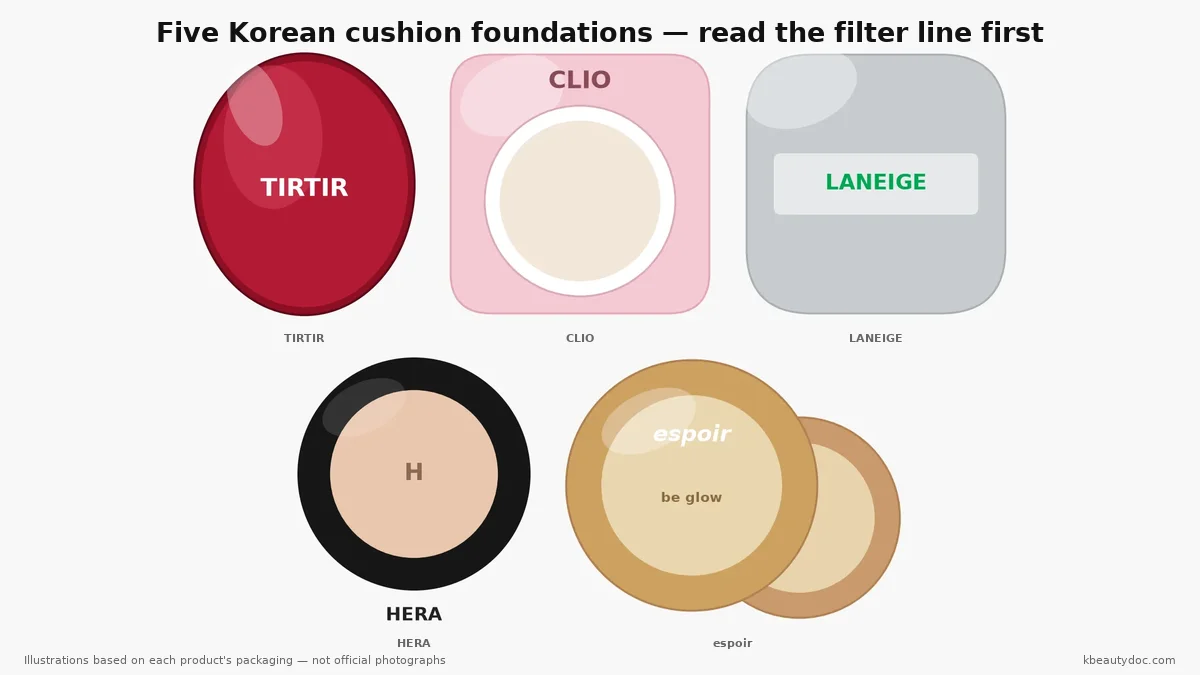
That sentence decides most of what follows. Every cushion below is registered in Korea as a UV-protection product, so the first line to read is not the coverage promise — it is which filters do the protecting and how high the number goes. After that, three things separate one compact from the next: the finish, what has been added to the base (niacinamide, centella, peptides), and what some skin dislikes (fragrance, alcohol). Below I read five cushions foreign visitors buy most often, using each brand’s own published ingredient list, and say which skin each one tends to suit — clinical judgement about formulas, not a prescription for your face.
Why cushions became Korea’s export
The format is genuinely Korean and genuinely recent. Amorepacific launched the first one, the IOPE Air Cushion, in 2008; by late 2016 the company reported its cushions had passed 100 million units worldwide, behind 177 patent applications. In 2015 Amorepacific and Parfums Christian Dior signed a partnership letting Dior use the technology, and the invention has since been written up as a business-school case study [1]. Korea’s regulator reported cosmetics exports of USD 11.4 billion in 2025, second in the world after France.
1. TIRTIR Mask Fit Red Cushion
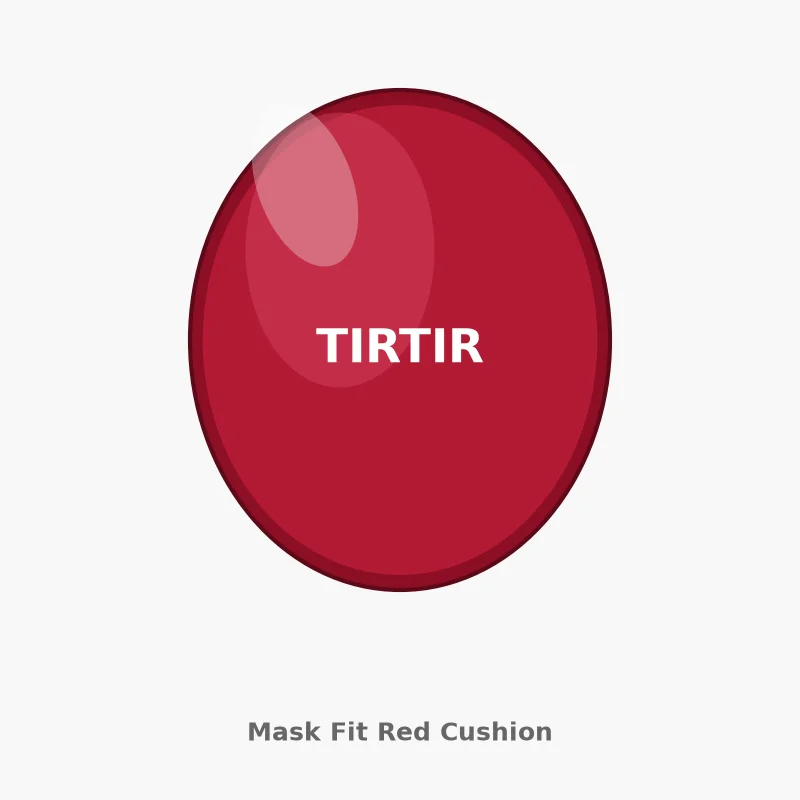
Illustration based on the product packaging; reference: TIRTIR official website (tirtir.co.kr)
18 g, SPF40 PA++, KRW 29,000 at home and $25 on the brand’s global store (often discounted to $20), in 40 to 45 shades depending on market. The interesting line is the filter list: titanium dioxide is the only UV filter declared. No homosalate, no cinnamate, no salicylate. Niacinamide sits eighth; the extracts run to astaxanthin, propolis and hibiscus. Fragrance is declared, alcohol is not.
Tends to suit: people who report stinging or watering eyes with organic filters — the mechanism I describe in why sunscreen burns your eyes — and anyone needing a deeper or more olive shade, since this is the widest range here. Mineral-only bases can read slightly grey on very deep skin, and shade range is part of the answer.
2. CLIO Kill Cover Mesh Glow Essential Cushion
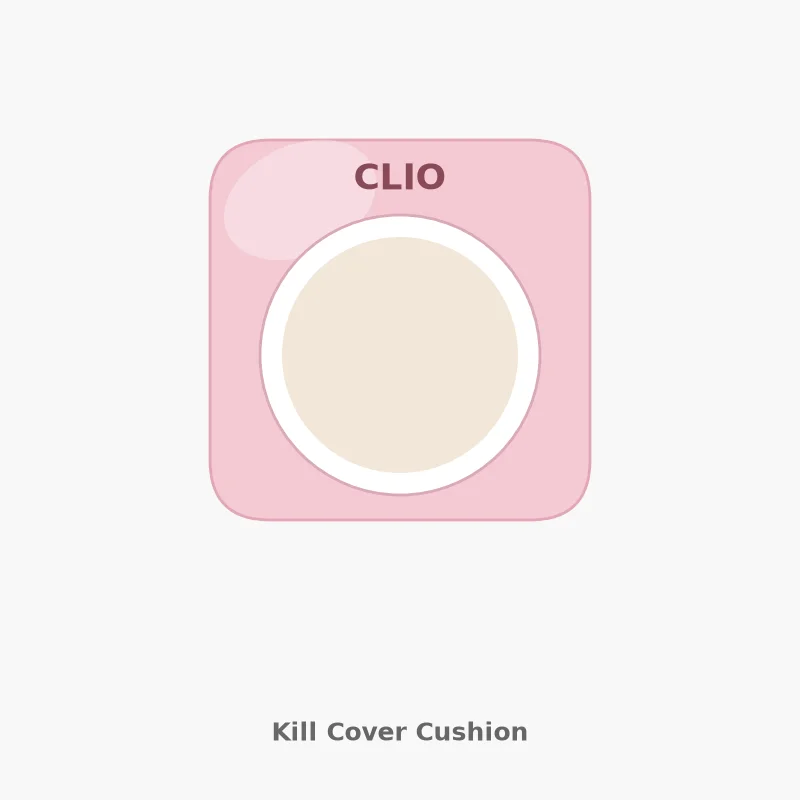
Illustration based on the product packaging; reference: CLIO official global store (clubclio.shop)
15 g plus a 15 g refill, SPF50+ PA++++ — the highest rating here — KRW 36,000 (KRW 27,000 on offer), $29 on CLIO’s own global store. The filters are hybrid: titanium dioxide with homosalate and ethylhexyl salicylate. Niacinamide is high on the list, alongside damask rose and chamomile flower waters, panthenol, adenosine and eight hyaluronic acid forms. Fragrance is declared.
Tends to suit: anyone who wants the highest labelled UVA rating with a luminous rather than flat finish. The two organic filters are the trade-off if your skin has reacted to that family.
3. LANEIGE Neo Cushion The Matte
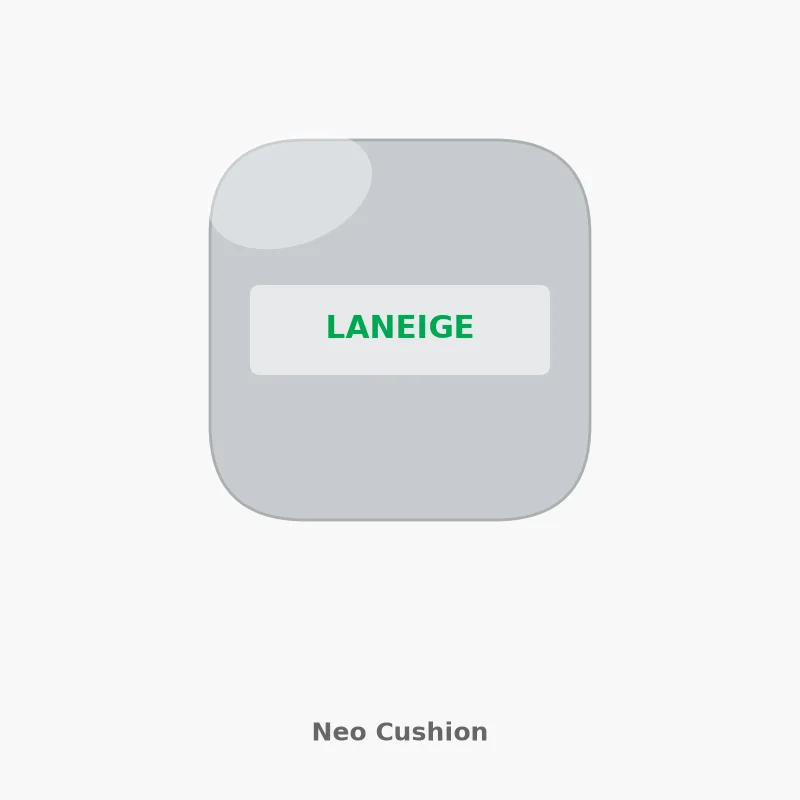
Illustration based on the product packaging; reference: LANEIGE official international site (int.laneige.com)
15 g, SPF42 PA+++, seven shades; LANEIGE prints no price on its international page. The base is a matte engineering job: titanium dioxide and homosalate as filters, then silica, nylon-12 and several silicone crosspolymers — the ingredients that absorb oil and blur texture. Niacinamide is twelfth. It also declares alcohol denat., fragrance and the allergens citronellol, geraniol, limonene and hydroxycitronellal, plus madecassoside and three acetyl peptides.
Tends to suit: oily, shiny skin and long days in humidity. The reasoning I use for sebum and pores applies — a matte base manages appearance, it does not change how much oil you make. That allergen list is why I would not reach for it first on reactive skin.
4. HERA Black Cushion Foundation
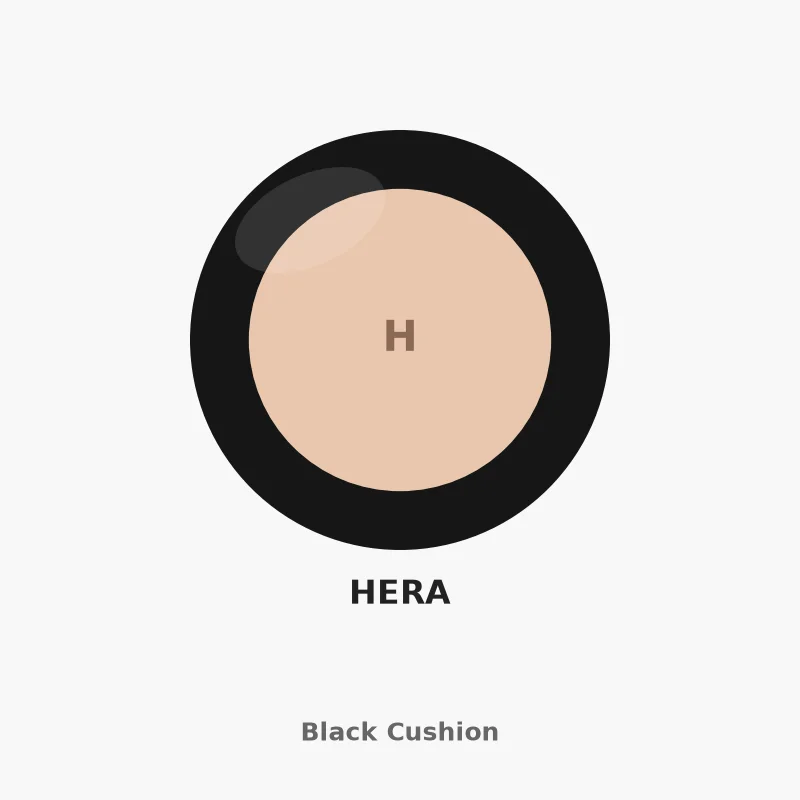
Illustration based on the product packaging; reference: HERA official international site (int.hera.com)
15 g, SPF34 PA++, ten shades, $43 on Amorepacific’s official global mall — the dearest here and the lowest rated on paper. Filters are ethylhexyl methoxycinnamate with titanium dioxide and zinc oxide. No niacinamide in the published list; there is mica, bismuth oxychloride, osmanthus extract, tocopherol and fragrance. HERA’s own pore-cover figures are company measurements, not peer-reviewed trials.
Tends to suit: someone buying for finish and feel — the soft-satin, second-skin option — who already wears a separate sunscreen underneath. SPF34 PA++ is not the day’s sun protection.
5. espoir Pro Tailor Be Glow Cushion All New
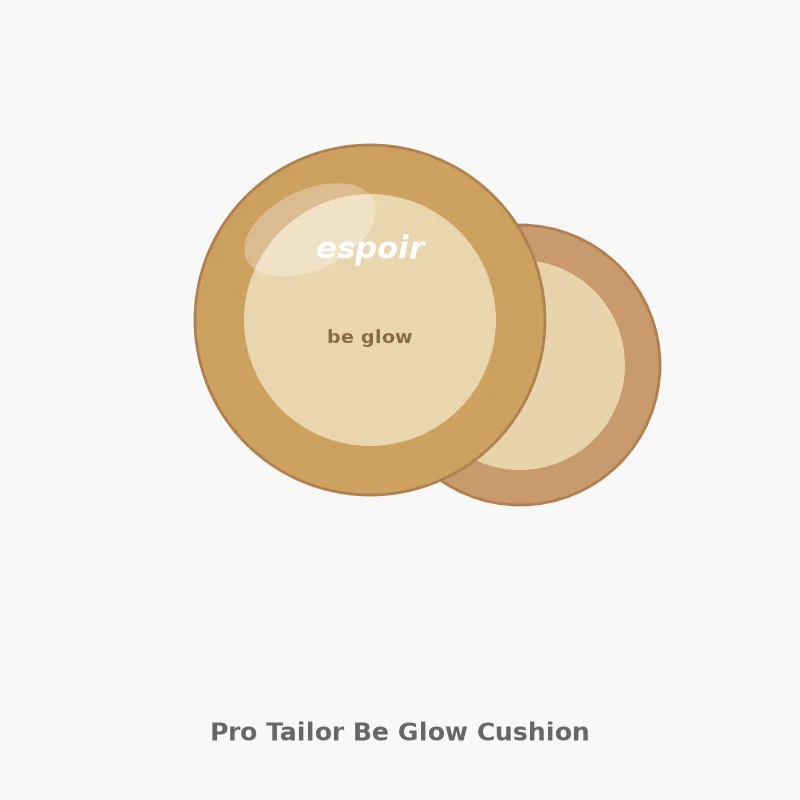
Illustration based on the product packaging; reference: espoir official website (espoir.com)
SPF42 PA++, KRW 35,000 for compact plus refill, five shades. Filters are titanium dioxide, ethylhexyl methoxycinnamate and zinc oxide. Niacinamide is thirteenth; adenosine, tocopherol and three centella acids sit low on the list. Ethanol and fragrance are declared.
Tends to suit: normal to dry skin that wants a dewy finish and a refillable pan. The centella content is real but near the bottom of the list, so I read it as formulation polish, not a treatment.
The three things that actually matter
Your cushion is not your sunscreen. SPF is measured at a thickness real users do not apply, and the shortfall cuts protection considerably [2] — a cushion goes on thinner still. Wear one over sunscreen, not instead of it; how to choose that sunscreen is in the Korean sunscreen label guide.
Wash the puff. This is the one cushion-specific piece of dermatology with hard data behind it. A Korean study cultured used cosmetics and found bacteria far more often in cushion compacts than in tubes, pumps and pressed compacts; the authors advise washing the puff weekly [3]. Fairly, they found no direct correlation between those isolates and acne — so this is hygiene, not a proven cause of breakouts.
Do not over-read “non-comedogenic”. The ingredient blacklists most of us grew up with came from rabbit-ear assays. Tested on human backs, products built from so-called comedogenic ingredients were not necessarily comedogenic [4]. A case-control study even found overall cosmetic use inversely associated with post-adolescent acne, though some individual products carried odds ratios above 1 [5]. Makeup is not the enemy, but any single product can be a problem for one person.
How to choose in the shop
Turn the compact over. Read the filters first, then the finish, then look for fragrance. All five declare fragrance, so if perfume is your problem, none is a free pass. Niacinamide appears in four of the five, but no brand publishes a percentage, and the trial evidence comes from a 5% leave-on treatment, not a base you remove at night [6]. Buy one, wash the puff weekly, and take it off with a cleanser you have already chosen. For the wider route, see what to actually buy in Korea.
FAQ
Can a cushion replace my sunscreen?
No. The SPF on the box is measured at a thickness nobody applies, and a cushion goes on thinner still. Treat it as makeup with a bonus.
Which of the five has the strongest UV rating?
CLIO’s Kill Cover Mesh Glow, at SPF50+ PA++++. HERA’s Black Cushion is the lowest at SPF34 PA++.
I sting with sunscreen. Is there a mineral-filter option here?
TIRTIR’s Mask Fit Red Cushion declares titanium dioxide as its only UV filter. Test it on a small area first.
Will a cushion clog my pores?
Human testing shows finished products containing so-called comedogenic ingredients are not automatically comedogenic. If one product reliably breaks you out, stop that product.
How often should I clean the puff?
Weekly, as the Korean container study recommends. Cushions hold water and get touched by fingers, which is why they culture more bacteria than tubes and pumps.
Are refills worth buying?
They cost less per gram and give you a fresh sponge. Once a cushion is open, the sponge is the part with the shortest life.
Is it safe to use a cushion after a clinic procedure?
Ask whoever treated you when to restart makeup. While skin heals, fragrance and a re-used sponge are the two things I would avoid. After an injection such as a hyaluronic acid filler, the needle points also need to close before anything is pressed over them.
References
- Lee B, Kang J. The power of peripheral innovation: a case study of AmorePacific’s cushion foundation. Research-Technology Management 2016;59(4):21-29. DOI: 10.1080/08956308.2016.1185340
- Petersen B, Wulf HC. Application of sunscreen — theory and reality. Photodermatol Photoimmunol Photomed 2014;30(2-3):96-101. DOI: 10.1111/phpp.12099
- Lee J, Ryu S, Kim J, Park S. Contribution of container types on cosmetics contamination. Ann Dermatol 2019;31(5):588. DOI: 10.5021/ad.2019.31.5.588
- Draelos ZD, DiNardo JC. A re-evaluation of the comedogenicity concept. J Am Acad Dermatol 2006;54(3):507-512. DOI: 10.1016/j.jaad.2005.11.1058
- Singh S, Mann B, Tiwary N. Acne cosmetica revisited: a case-control study shows a dose-dependent inverse association between overall cosmetic use and post-adolescent acne. Dermatology 2013;226(4):337-341. DOI: 10.1159/000350936
- Bissett DL, Oblong JE, Berge CA. Niacinamide: a B vitamin that improves aging facial skin appearance. Dermatol Surg 2005;31(7 Pt 2):860-865. DOI: 10.1111/j.1524-4725.2005.31732
Disclaimer: I write about cosmetics and shops as general information, not as a recommendation of any particular product or retailer. I receive no sponsorship, samples or payment from the brands mentioned. Skin responds differently from person to person, so patch test anything new, and see a doctor about a skin condition.
Physician in non-surgical aesthetic medicine, practising in Ansan, South Korea. Every article here is written from clinical practice and the published literature.
About the author · Contact