The material in Korea’s most talked-about skin booster began as a sheet of donated human skin, used to close burns.
The short answer
- Re2O (리투오) and CellREDM (셀르디엠) are injectable powders made from human acellular dermal matrix (hADM) — donated human dermis with the cells stripped out, leaving the collagen scaffold.
- In Korea they are legally human tissue grafts, not devices and not drugs, so they reach clinics without the product licence a filler needs.
- Human evidence for the cosmetic use is one small split-face trial (20 people, 20 weeks). Real, but early.
- Regulators are still writing the rules, and the ethics of using donated tissue for beauty is an open argument.
Patients now ask for this by name. Here is what I can verify.
1. What these products are made of
The dermis is mostly extracellular matrix (ECM) — a scaffold of collagen, elastin and sugar-protein molecules that gives skin its thickness and spring, and the scaffold itself is not alive. Acellular dermal matrix is donated human skin with those cells washed out, which is what makes it tolerable to another immune system. L&C Bio says its AlloClean process removes the cells without destroying that three-dimensional structure.
For a booster, that sheet is freeze-dried and ground fine enough to pass through a needle. CellREDM particles are 75 micrometres or smaller; Re2O comes as a 150 mg vial of particulate dermis, reported in the trial below as roughly 80% collagen with residual DNA under 50 ng/mg [1]. You may see “89% collagen” on clinic posters; the journal figure is the one I rely on.
Both companies say the donor tissue is imported and screened under American Association of Tissue Banks (AATB) standards from donors who consented to cosmetic use, and Korea regulates it under the Human Tissue Safety and Management Act (인체조직법).
2. The history: from burn wards to cheeks
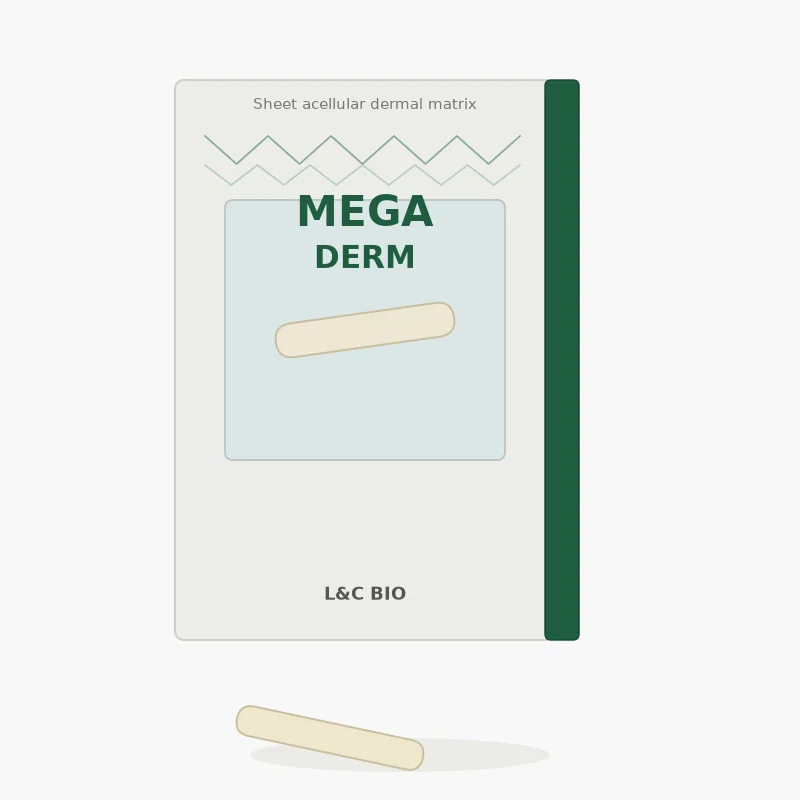
Illustration based on the product packaging; reference: L&C Bio catalogue
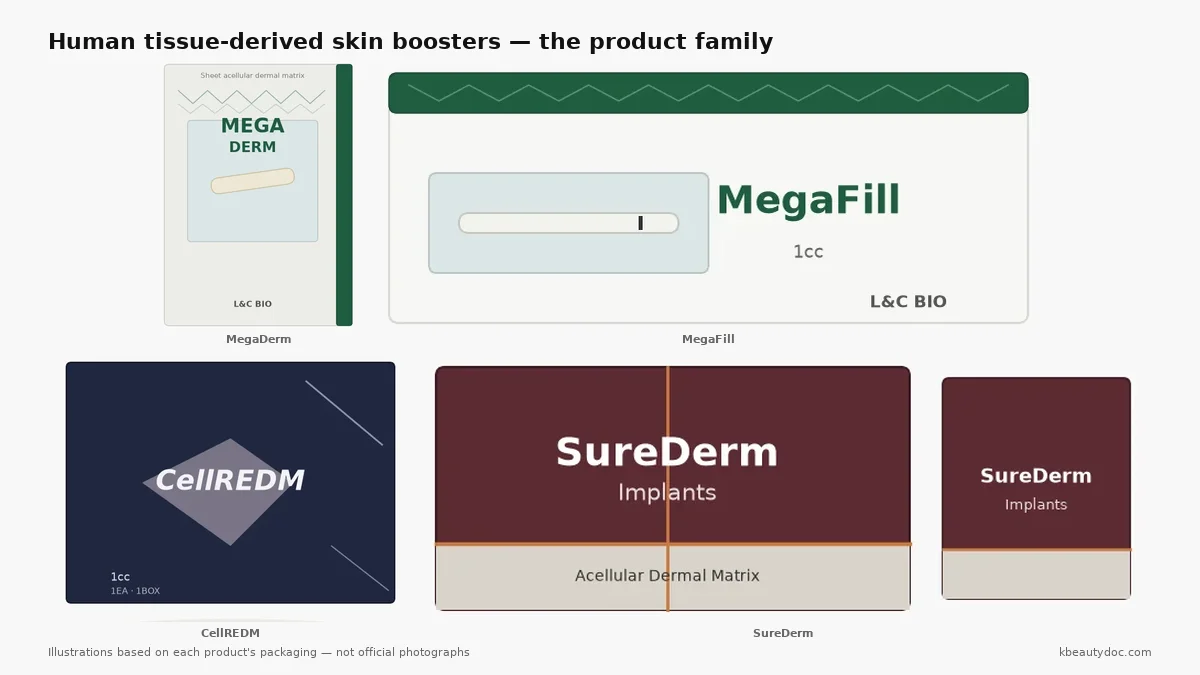
Acellular human dermis entered medicine in the 1990s as a skin substitute for burns [2], then spread into breast reconstruction, hernia repair and facial reconstruction — the indications L&C Bio lists for its sheet product, MegaDerm, pictured above. It reached aesthetic clinics with three decades of surgical use behind it, and a 2024 meta-analysis found no significant difference in the main complications of breast reconstruction [3].
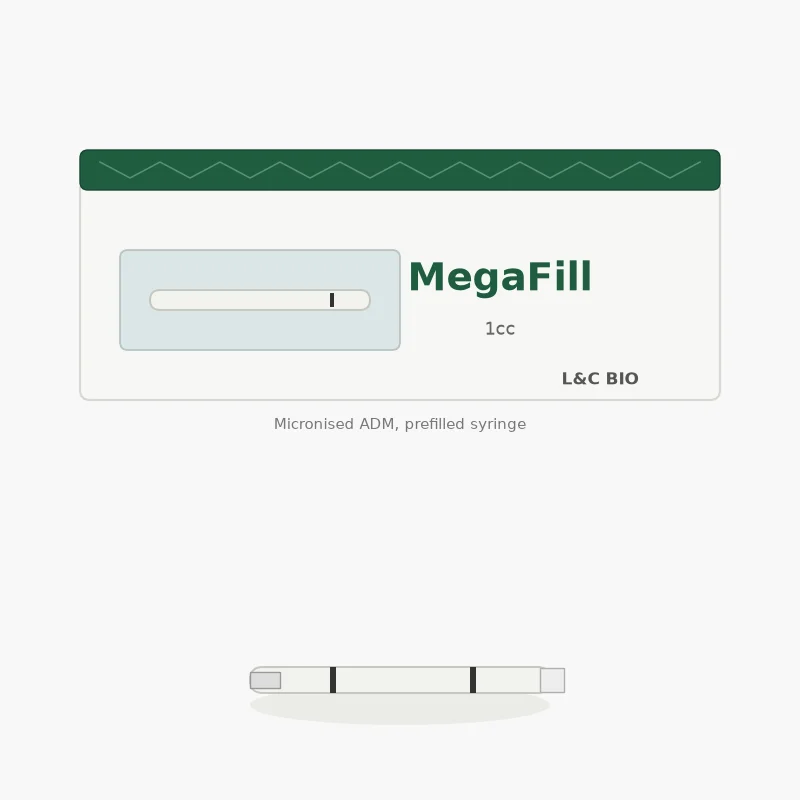
Illustration based on the product packaging; reference: L&C Bio catalogue
The step into aesthetics came from grinding that sheet down. Injectable micronised ADM already existed for reconstruction — the syringe above is MegaFill — and once the particles were fine enough for a mesotherapy needle, the same material could go into a cheek. L&C Bio launched Elravie Re2O in 2024; Hans Biomed followed with CellREDM.
3. What the evidence shows
One clinical trial of the cosmetic use is published [1]. Twenty people, split-face, double-blinded, one session, followed for twenty weeks: the side injected with Re2O powder mixed into a hyaluronic acid booster measured better than the side given the same HA booster alone — density, elasticity, wrinkle depth, pore area, hydration — with no serious adverse events, only transient redness and swelling.
Two caveats. It compares HA-plus-matrix against HA, not matrix against nothing. And the senior author discloses that he advised the maker on developing the product, though the paper reports no external funding.
That is more than many boosters show at launch, and still twenty people over five months — a promising signal, not a settled question. A separate randomised trial of a different micronised ADM found it acceptable as an injectable, but that was a filler comparison [4].
Durability past 20 weeks, session numbers and performance against polynucleotide or PDLLA boosters are clinical impression, not trial data. My reading is that this behaves more like a structural scaffold than an inflammation-driven stimulator — clinical judgement, not a proven fact.
4. The downsides
The regulatory position is unusual. Classified as human tissue rather than a device, these products skip device-style licensing and mandated pre-market trials. A proposed rule change reported in August 2026 would double adverse-event reporting, restrict cosmetic advertising claims, and require that patients be told the material is human-derived.
Residual biological risk is small but not theoretical. Screening is strict, and acellular processing is not transplanting living tissue. Still, a contaminated bone allograft transmitted tuberculosis in the United States in 2021–2022 [5] — a cell-containing product processed very differently from ADM, but it is why traceability rules exist.
Ordinary injection risks apply: bruising, swelling, tenderness, lumpiness if placed unevenly, and the small infection or vascular risk any facial needle carries. Cost is high and varies widely, so I will not quote a number.
The ethical argument is live. Whether tissue donated abroad and consented for cosmetic use fits the spirit of donation is still argued in Korea, and the law does not say whether donated tissue may be used for purely cosmetic ends. Patients should not be told that is resolved.
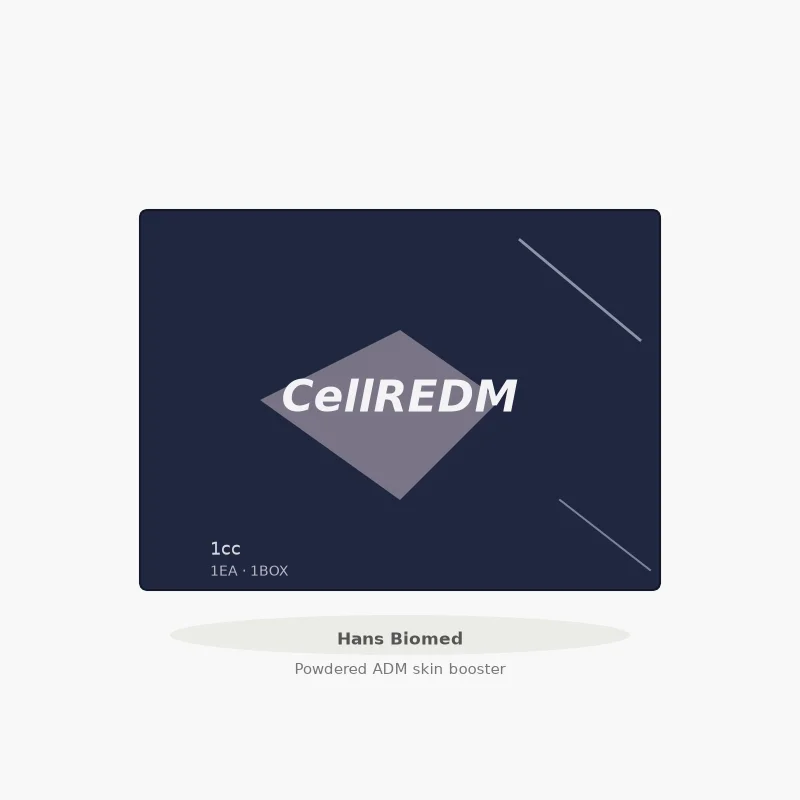
Illustration based on the product packaging; reference: Hans Biomed
5. Who it suits, and who should think twice
General information only — the decision belongs with a doctor who has examined you.
Best fit: someone in their forties or older whose complaint is thin, crepey, deflated skin rather than one line or spot — the population the trial recruited.
Think twice, or wait, if you are pregnant or breastfeeding; have active infection or inflammatory disease in the area; have a bleeding disorder or take anticoagulants; have a history of keloids or reactions to injectables; or would be uncomfortable on personal or religious grounds with a human-donor product. The last is not a medical contraindication — but you are entitled to ask.
Against the established options: Rejuran versus Juvelook covers the polynucleotide and PDLLA routes, Juvederm versus the Korean HA fillers the volume side, and choosing by device name why Korean menus are built from brand names.
6. The product family, side by side
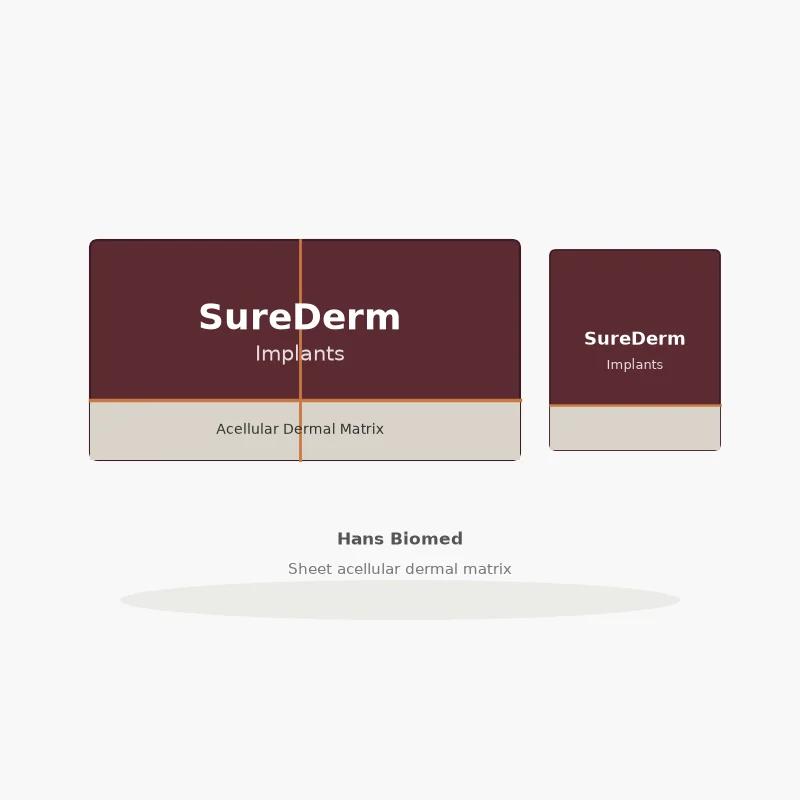
Illustration based on the product packaging; reference: Hans Biomed
The lower rows stop a common confusion: Rejuran is fish, Juvelook synthetic, exosome products cosmetics.
| Product | Maker | Raw material | Korean classification |
|---|---|---|---|
| Elravie Re2O (리투오) | L&C Bio | Particulate human acellular dermis, 150 mg vial | Human tissue |
| CellREDM (셀르디엠) | Hans Biomed | Freeze-dried micronised human acellular dermis, ≤75 µm | Human tissue |
| MegaDerm | L&C Bio | Sheet human acellular dermis | Human tissue (MegaDerm Plus licensed as a device) |
| SureDerm | Hans Biomed | Sheet human acellular dermis | Human tissue |
| Rejuran | Pharma Research | Polynucleotide from salmon DNA | Medical device |
| Juvelook | Vaim | PDLLA plus hyaluronic acid, synthetic | Medical device |
| Exosome products | Various | Vesicles from human stem cell culture medium | Cosmetic — not licensed for injection |
FAQ
Is Re2O really made from cadaver skin?
It is made from donated human dermis with the cells processed out. The maker states the tissue is imported from donors screened and consented under AATB standards.
Can my body reject it?
Removing the cells and residual DNA takes out the parts that trigger rejection, and the trial reported no serious adverse events in 20 people over 20 weeks — a small sample, and mild redness and swelling did occur.
How is this different from Rejuran?
Rejuran’s polynucleotides come from salmon DNA and prompt your own cells; hADM boosters place a human collagen scaffold into the dermis. Rejuran is a licensed device; Re2O and CellREDM are human tissue.
Is it approved by Korea’s MFDS?
Not the way a filler is. It is managed under the Human Tissue Safety and Management Act — donor screening, sterile processing, traceability, adverse-event reporting — but carries no device or drug licence. The MFDS was still writing rules for the category in 2026.
How long does it last?
The trial followed one session for 20 weeks and still saw a difference from the control side. Beyond that there is no published human data, so any longer figure is an estimate.
How many sessions will I need?
The trial used one. Clinic protocols vary, and there is no published schedule I would call evidence-based.
Should I get this on a short trip to Korea?
That depends on things I cannot assess from here. Any injectable is easier to manage when the person who treated you is reachable afterwards, and this category is new enough to want a longer conversation than a walk-in allows.
References
- Lee YI, Chau NH, Nguyen NH, Ham S, Baek Y, Kim J, Lee JH. Injectable particulated human acellular dermal matrix booster for skin restoration. International Journal of Molecular Sciences 2026;27(5):2193. PMID 41828422
- Wainwright DJ. Use of an acellular allograft dermal matrix (AlloDerm) in the management of full-thickness burns. Burns 1995;21(4):243-8. PMID 7662122
- Acellular dermal matrix in implant-based breast reconstruction: a meta-analysis of randomised and prospective studies. Annals of Surgical Oncology 2024;31(5). PMID 38285304
- Zhang C, et al. Micronised acellular dermal matrix versus cross-linked collagen filler for nasolabial folds: a non-inferiority randomised trial. Aesthetic Plastic Surgery 2026;50(10):3710-3719. PMID 41381953
- Tuberculosis transmission from contaminated bone allograft, United States, 2021-2022. Clinical Infectious Diseases 2023;76(10):1847-1849. PMID 36660866
Disclaimer: This is general information, not a diagnosis or a treatment plan. Brand names are discussed for information only and are not endorsements. Injections and prescription medicines should be chosen and given only by a licensed professional who has examined you, and what suits another person may not suit you.

Physician in non-surgical aesthetic medicine, practising in Ansan, South Korea. Every article here is written from clinical practice and the published literature.
About the author · Contact