
In Korea, the TIRTIR Red Cushion is sold as SPF40. On TIRTIR’s US product page, the same red compact lists no SPF at all.
Short answer:
- Yes, it is worth it for coverage and shade range. The US store has 40 shades, and the code on each one is easy to read.
- Do not count it as your sunscreen. Its only UV filter is titanium dioxide, and the two darkest shades are not sold as UV products even in Korea.
- Fragrance is on every shade’s label. If perfume bothers your skin, test it on your jaw first.
Want coverage that lasts from morning to night?
This is the cushion most people ask me about first.
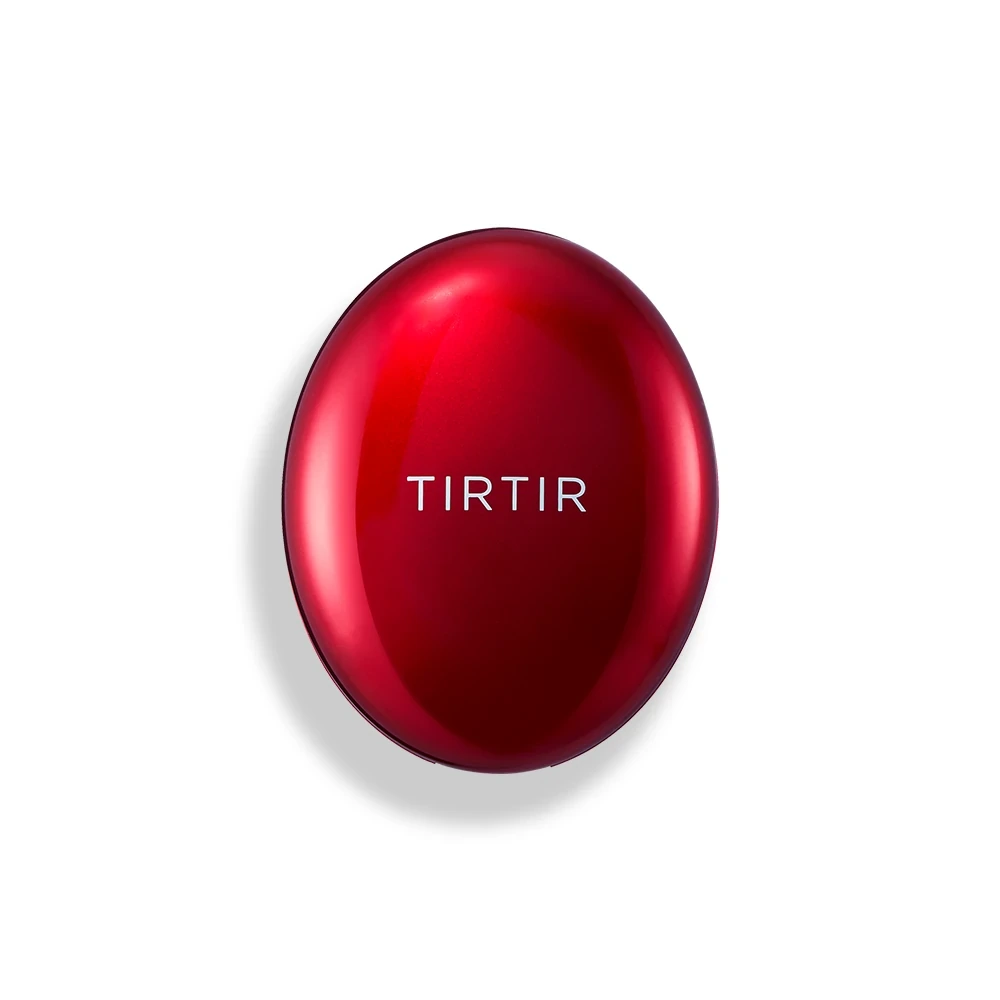
It is a silicone-based, full-coverage cushion with a semi-matte finish, per the brand’s official site. The brand also claims “up to 72 hours” of wear. That is the brand’s claim, not a published test.
What is actually in the TIRTIR Red Cushion?
TIRTIR publishes a separate ingredient list for every US shade. I read all 40. The top of each list looks almost the same:
- Water, cyclopentasiloxane and dimethicone — silicones. They make it glide, then set into a thin film.
- Titanium dioxide — second or third in most shades. It is a white mineral pigment and a UV filter at the same time.
- Iron oxides — the colour. In the deepest shades they move up and titanium dioxide moves down.
- Niacinamide and adenosine — in Korea, the brand lists the cushion as a registered brightening and anti-wrinkle product, per its Korean site.
- Fragrance — declared in every shade. No alcohol is listed.
Does the TIRTIR cushion have SPF?
It depends on where you buy it.
- Korea: SPF40 PA++ for most shades, per the brand’s Korean site. PA runs from + to ++++, so ++ is the second of four UVA grades — more in my Korean sunscreen label guide.
- Korea, shades 51N and 55N: listed as non-functional, so no UV claim. In these two, titanium dioxide drops to 28th on the list.
- US page and Amazon listing: no SPF stated.
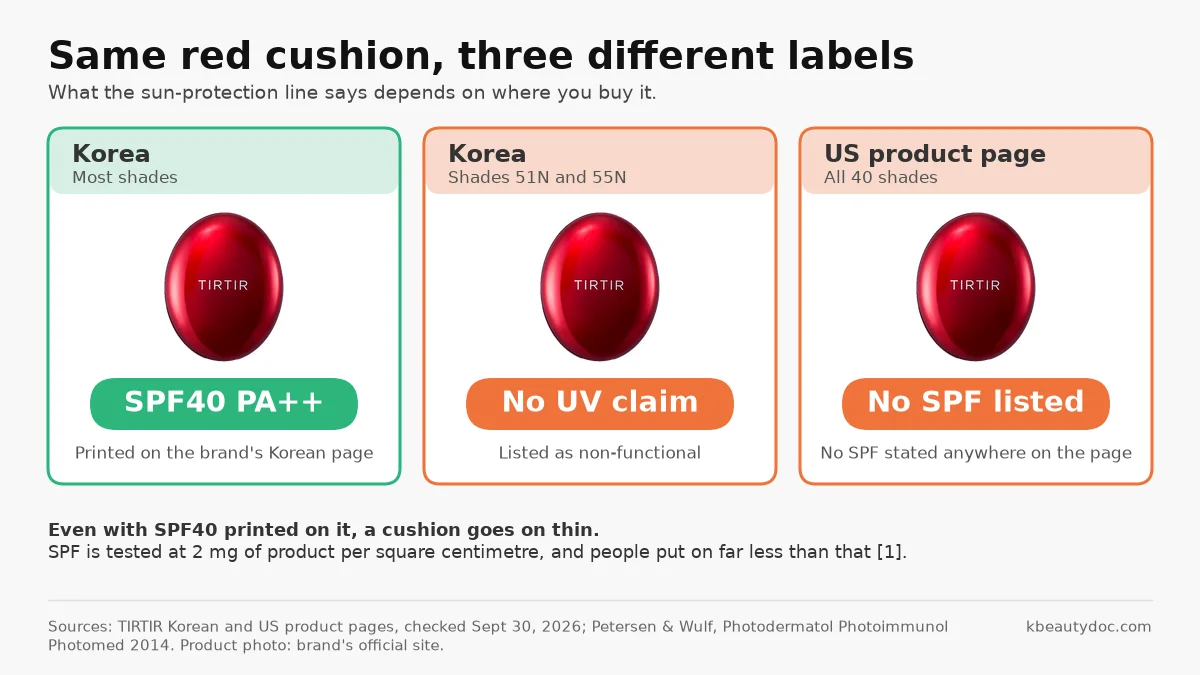
Even with SPF40 printed on it, a cushion goes on thin. SPF is tested at 2 mg of product per square centimetre, and people put on far less than that in real life [1].
How do I find my TIRTIR shade?
The number is depth; the letter is undertone. 10 is the lightest and 55 the deepest. C is cool (pinkish), N is neutral, W is warm (yellowish).
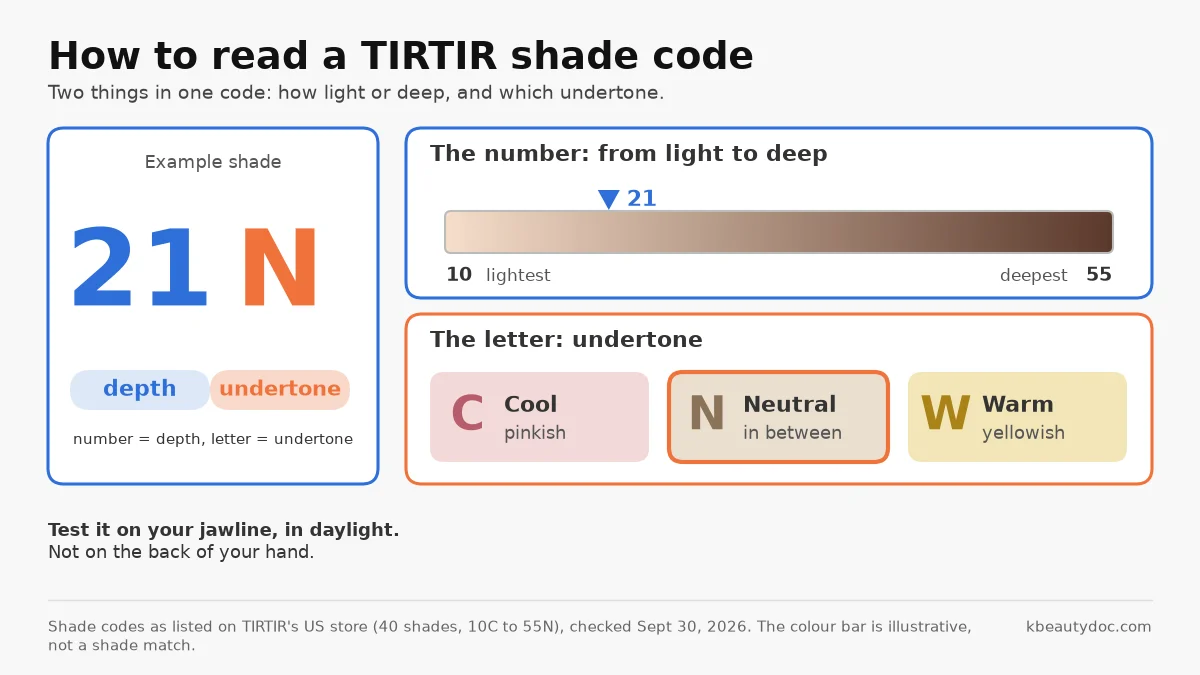
Test it on your jawline, in daylight, not on the back of your hand.
Who is it for — and who should skip it?
- Good fit: normal to combination skin that wants full coverage and a long day.
- Good fit: people whose eyes sting with chemical sunscreen filters. This has none — see why sunscreen burns your eyes.
- Test first: skin that reacts to fragrance.
- Maybe skip: very dry, flaky skin. My clinical judgement, not a proven fact: a full-coverage semi-matte base tends to catch on flakes.
What I tell my patients
Sunscreen first, cushion second. Put on a real sunscreen, give it a few minutes, then press the cushion on top.
And wash the puff every week. In a Korean study, cushion compacts grew bacteria far more often than tubes and pumps [2]. My puff-washing guide shows how. For how TIRTIR compares with other Korean cushions, see my cushion guide.
FAQ
Does the TIRTIR cushion have SPF?
The Korean version is labelled SPF40 PA++, except shades 51N and 55N. The US product page lists no SPF. Either way, wear a separate sunscreen underneath.
How do I find my TIRTIR cushion shade?
Read the code. The number shows depth, from 10 (lightest) to 55 (deepest), and the letter shows undertone: C cool, N neutral, W warm. Test on your jawline in daylight.
Is the TIRTIR cushion good for acne-prone skin?
There is no published pore-clogging test for it. Finished products with so-called comedogenic ingredients are not always pore-clogging [3]. Wash the puff weekly and remove it fully at night.
As an Amazon Associate I earn from qualifying purchases. This article contains affiliate links: if you buy through them, I may earn a small commission at no extra cost to you. It does not change what I recommend.
References
- Petersen B, Wulf HC. Application of sunscreen — theory and reality. Photodermatol Photoimmunol Photomed 2014;30(2-3):96-101. doi:10.1111/phpp.12099
- Lee J, Ryu S, Kim J, Park S. Contribution of container types on cosmetics contamination. Ann Dermatol 2019;31(5):588. doi:10.5021/ad.2019.31.5.588
- Draelos ZD, DiNardo JC. A re-evaluation of the comedogenicity concept. J Am Acad Dermatol 2006;54(3):507-512. doi:10.1016/j.jaad.2005.11.1058
Disclaimer: I write about cosmetics and shops based on clinical experience. Product mentions reflect my clinical opinion; availability and formulas change, so check the current label. Skin responds differently from person to person, so patch test anything new, and see a doctor about a skin condition.

14 years in practice · replies to messages herselfPhysician in non-surgical aesthetic medicine, practising in Ansan, South Korea. Every article here is written from clinical practice and the published literature.
About the author · Contact