

Everyone says Seoul clinics are factories.
So that’s what worries you, right?
Yes. Is that bad?
Let me explain how Korea’s factory-style clinic system works.
Should I just avoid them?
Not always. It depends on what you need.
“Factory clinic” sounds like an insult. In Korea it is closer to a business model.
Short answer:
- A “factory clinic” is a nickname, not a legal type of clinic. It means a clinic built for volume: a coordinator first, a short doctor visit, a set menu of packages.
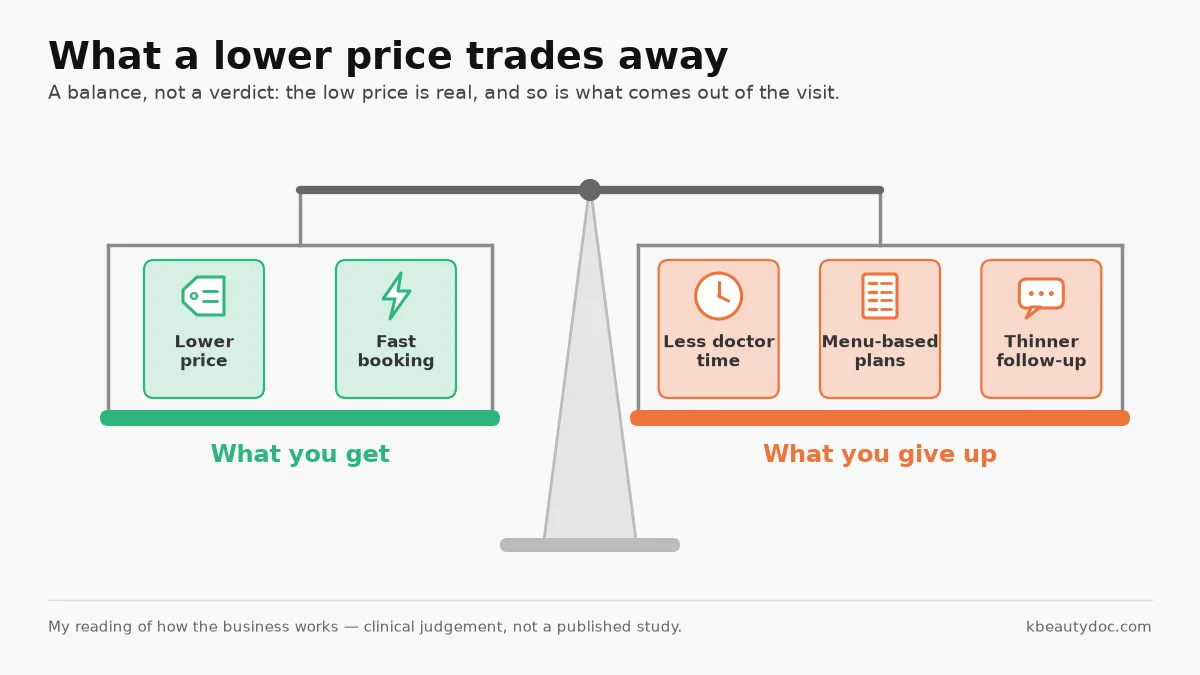
- That structure is why the price is low. In return you get less time, less tailoring and thinner follow-up.
- It can fit a simple, clearly named goal. It fits a first visit, a complicated skin problem or a tight travel schedule less well.
Where does the name come from?
Koreans have their own word for it: gongjang-hyeong, “factory-type”. It is used about skin clinics that see a very large number of people each day at low prices.
Visitors now search “factory clinic Seoul” before they book. The word describes speed and volume. On its own, it says nothing about skill.
How does a factory-style clinic work, step by step?
A typical visit runs like a well-drilled line:
- Booking by app or chat, often with an event price already chosen
- A coordinator consultation — a staff member, often called sil-jang, takes your history, takes photos and walks you through the price menu
- A short doctor check, sometimes a few minutes
- Numbing cream in a shared room, prepared by other staff
- The treatment, planned and directed by the doctor
- Payment and aftercare at the front desk
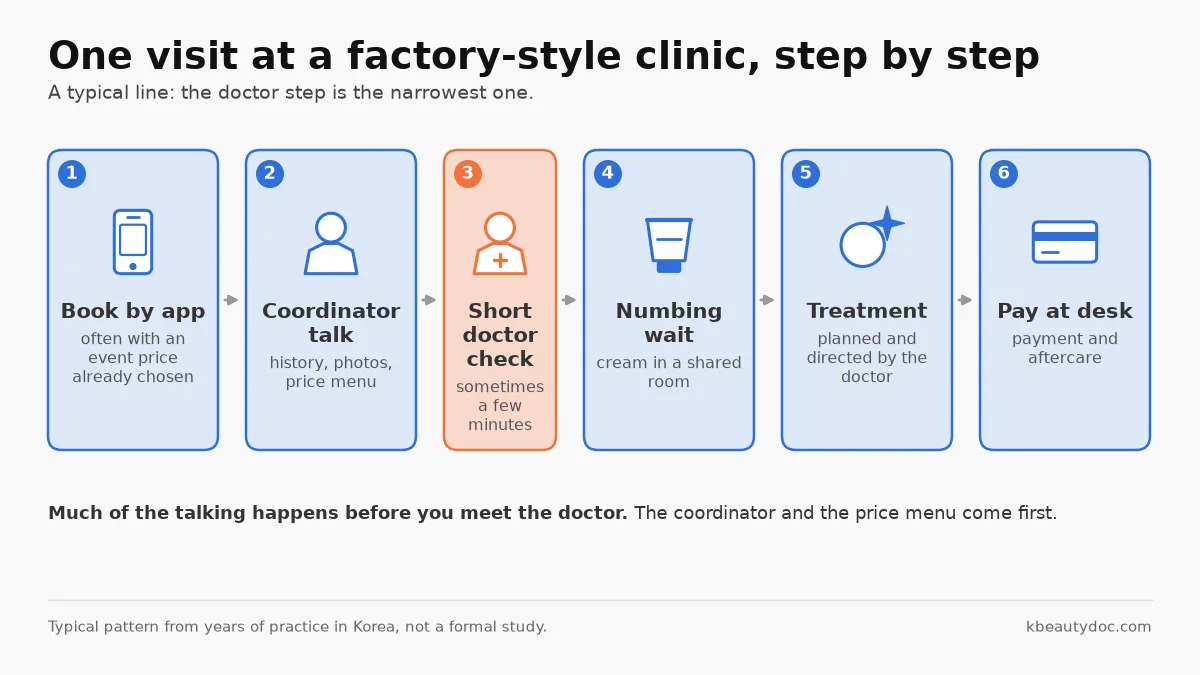
I explain why so much of the talking happens before you meet the doctor in a separate piece.
Why is it so cheap?
Volume spreads the fixed costs. Rent, machines and staff cost about the same whether ten or a hundred people walk in. More visits means a lower price per visit.
Packages and event prices bring people in. A low first-visit price or a five-session bundle keeps the schedule full. Machine names do the advertising, because a device name is easy to remember and easy to search — the trap I describe in does the laser machine name matter?
This is my reading of how the business works, from years of practice in Korea — clinical judgement, not a published study.
What do you give up for the lower price?
The trade is real, and it comes in three places:
- Consultation time. Your questions get compressed into minutes. What you did not think to ask, nobody may raise.
- Tailoring. The plan is usually picked from a menu. A menu fits the common case, and your skin may not be the common case.
- Follow-up. When something worries you three days later, who answers? After you fly home, that gap gets wider.
When does a factory clinic make sense? What I tell my patients
It can work well when:
- You have had the same treatment before and know how your skin reacted
- The goal is simple and clearly named, and you can say it in one sentence
- You have a few days left in Korea after the visit
Slow down when:
- It is your first treatment of this kind
- Your skin problem is mixed or hard to name — flares, patches, scarring
- You fly out the next day, with no time to settle or come back with a question
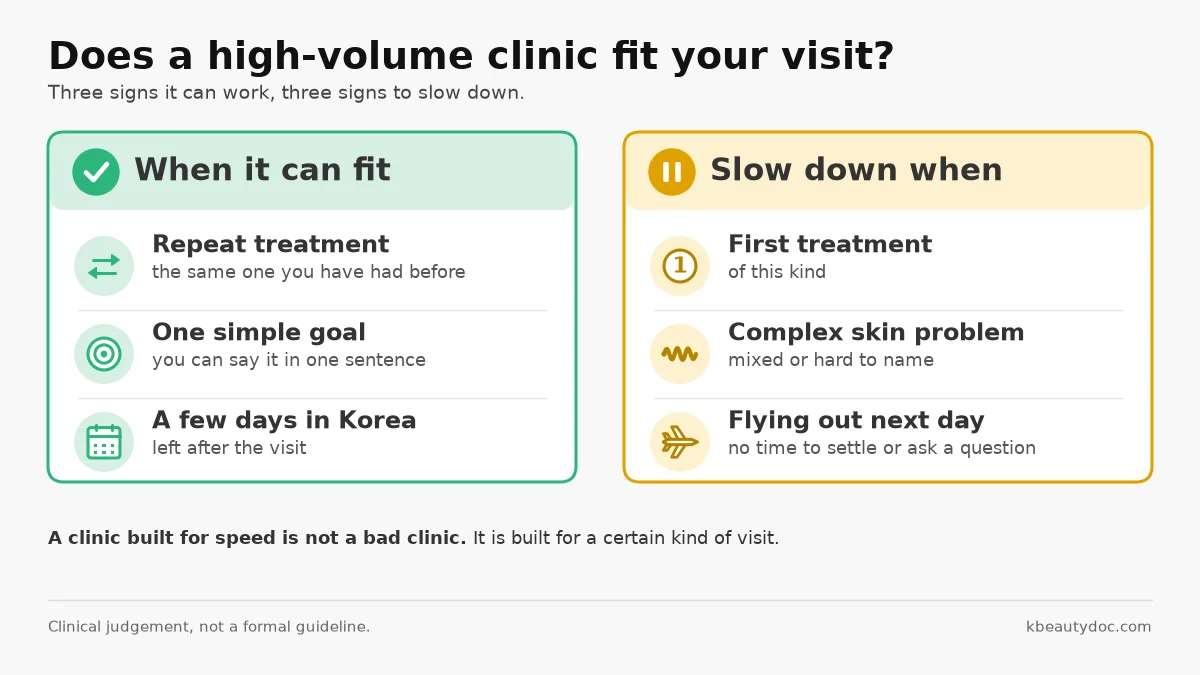
A clinic built for speed is not a bad clinic. It is built for a certain kind of visit. For the questions to bring to any clinic, see what to know before a skin clinic visit in Korea.
And if you would rather have more time with the doctor, here are seven things to check before you book.
FAQ
Are factory clinics in Korea safe?
The word “factory” describes speed and volume, not safety. What you can check is whether your history reached the doctor, what exactly was done, and who to contact afterwards.
What does “factory style clinic Korea” mean in reviews?
Usually a high-volume clinic where a coordinator consults first, the doctor visit is short and prices come as packages. It is a description of the system, not a rating.
Why are skin clinics in Seoul so cheap?
Mostly volume. Fixed costs are spread over many visits, and packages keep the schedule full. The lower price comes with less consultation time and a menu-based plan.
Have a question about your own case? Ask me on LINE or by email — details on the Contact page.
Disclaimer: This guide is intended to help international visitors understand the Korean aesthetic medical system. I do not provide clinic recommendations or endorse specific facilities. Nothing here is personal medical advice, and decisions about your own care belong with a licensed doctor who has examined you.
14 years in practice · replies to messages herselfPhysician in non-surgical aesthetic medicine, practising in Ansan, South Korea. Every article here is written from clinical practice and the published literature.
About the author · Contact