
Korea and Japan each have a rice beauty legend: Korean women washing their faces in cloudy rice water, and Japanese sake brewers with soft, pale hands.
Short answer:
- Yes, as a moisturiser. Rice toners and sake lotions are mostly water and humectants, plus a little rice extract or rice ferment.
- The traditions are real but thin. The brewer story comes mostly from cosmetic companies.
- Cheap is fine. Adding water to skin is a simple job, and simple bottles do it.
What does the Donguibogam say about rice and skin?
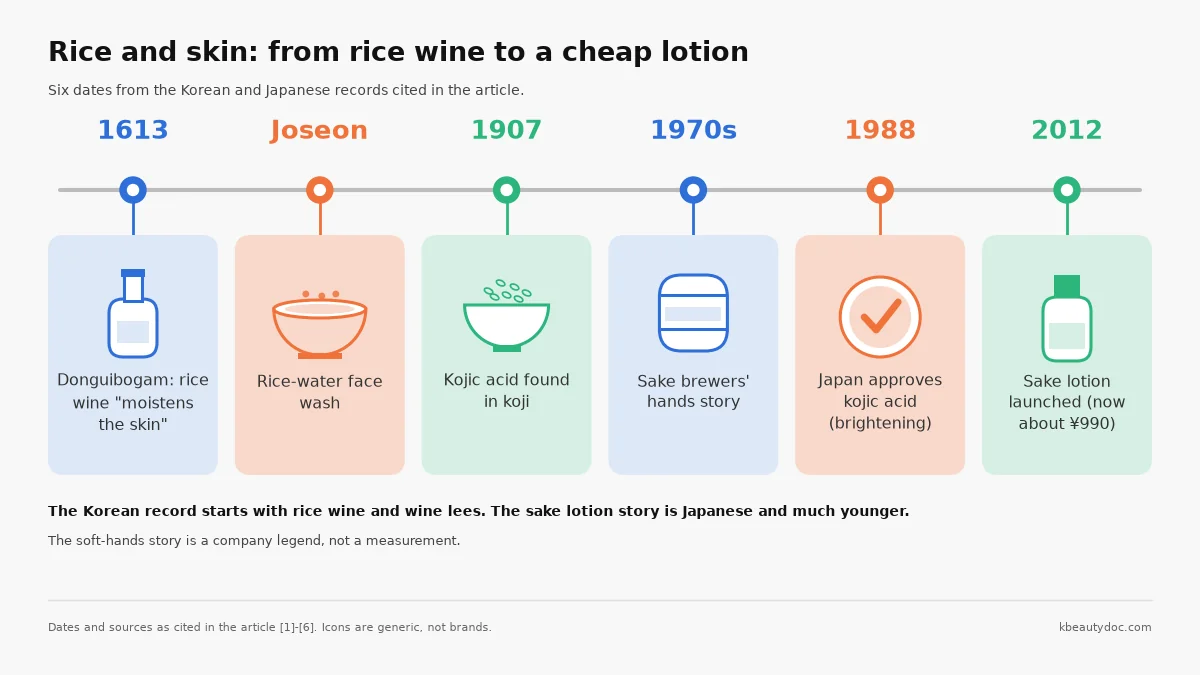
The Donguibogam (1613) is Korea’s most famous medical book (see my hatomugi article). It treats plain rice as stomach food: it “warms the middle” and stops diarrhoea. No skin [1].
The skin line sits under rice wine: drinking it “moistens the skin”, in my translation. The same entry warns that long-term drinking harms the mind and shortens life [1].
The closest thing to skin care is wine lees, the mash left after brewing, used to wash frost-damaged skin [1]. I found no beauty entry for rice-washing water.
Did Korean women really wash their faces with rice water?
Yes. A 2016 Korean study says people in the Joseon era mostly washed with jodu, finely ground beans or rice, and rice-washing water, “the easiest thing to get”, was also widely used [2]. Imported soap later pushed both aside.
Same grain, two legends.
Why do people say sake brewers have soft hands?
SK-II says 1970s scientists noticed elderly sake brewers’ hands looked younger than their age [3]. Sansho Pharmaceutical tells a similar story that led it to koji, sake’s brewing mould [4].
But a 2014 Japanese sake magazine says cold water badly chaps brewers’ hands [5]. It is a company legend, not a measurement.
What is kojic acid, and is it in sake lotion?
Koji gave us kojic acid, approved in Japan in 1988 for dark spots [4, 6]. It can cause allergy (see my note), and the products below do not list it. For stubborn spots, see my guide to prescription pigment creams.
Why is sake lotion so cheap?
Kikumasamune, a sake brewer since 1659, launched its “sake lotion” in 2012. In Japan the high-moisture 500 ml costs about ¥990, per its official shop; Amazon US sells it with an English label.
Simple recipe, big bottle, low price: the same pattern as hatomugi toner.
Korean “toner” is not American toner
An American toner is usually wiped off with a cotton pad after cleansing, often with alcohol to tighten. A Korean or Japanese toner is the first moisture step: pour it into your palm and pat it in, no cotton needed. Per the brand’s directions, haruharu’s toner goes on evenly after washing, then “pat lightly to fully absorb”, and can be layered 2-3 times. Kikumasamune’s label also says to work it in by hand.
Which rice toners and sake lotions can you buy in the US?
Oily or easily irritated skin?
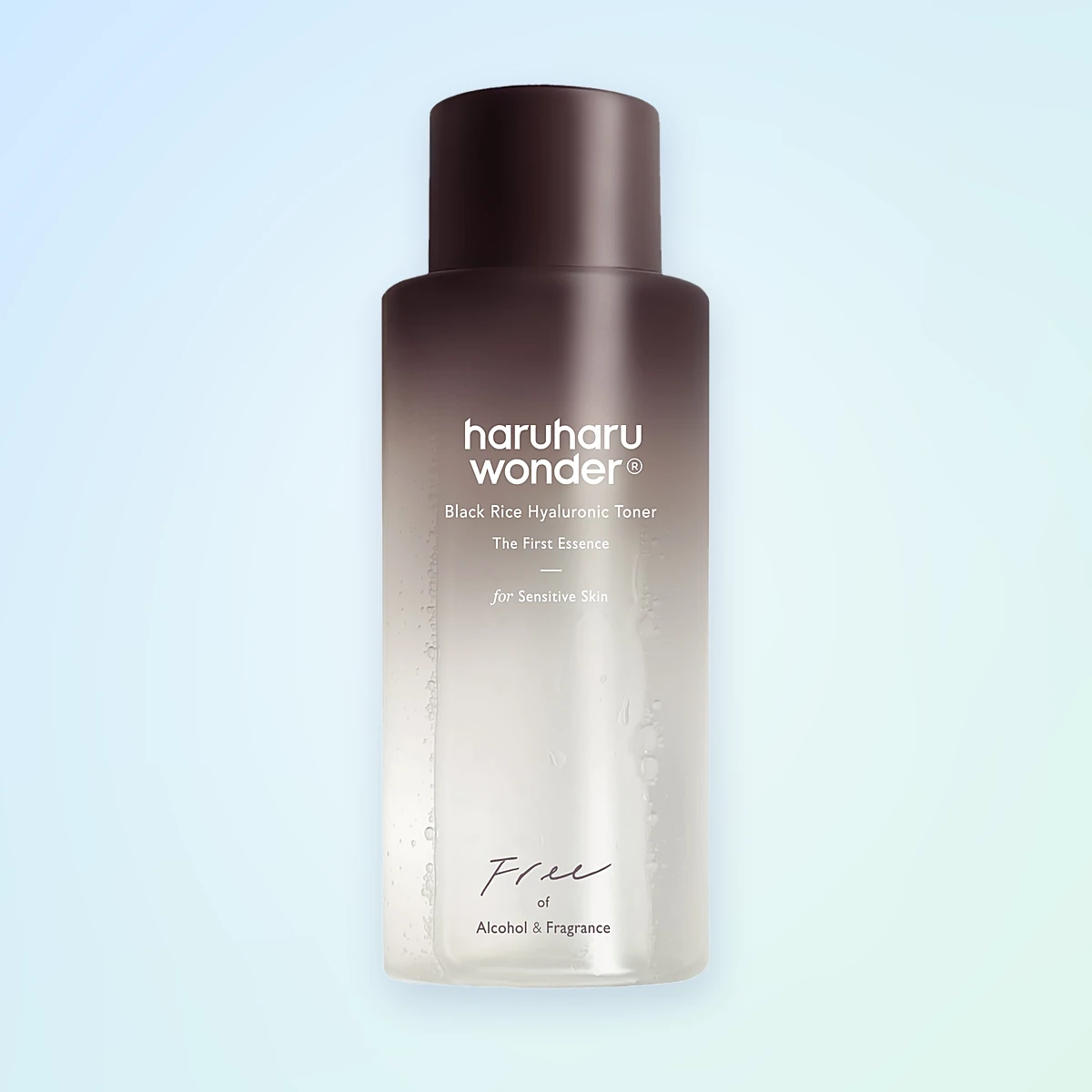
Photo: the brand’s official store.
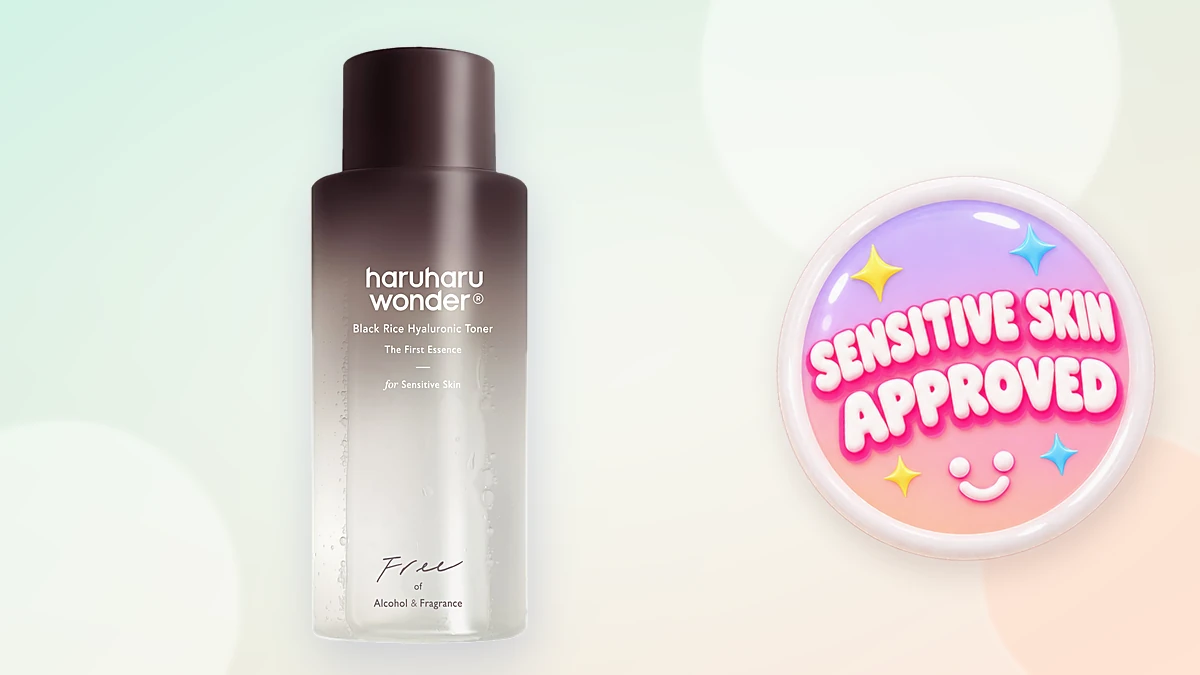
Choose the “for Sensitive Skin” version, with no alcohol or fragrance listed. The regular one contains lavender oil and alcohol.
Watery and light: rice extract plus an Aspergillus ferment, the same mould family as sake’s koji. Enough on its own for oily skin. If you are dry, follow it with a cream.
Approved means I read the full label and would be fine with a patient using it. It is not a guarantee.
Dry skin, or one big bottle for face and body?
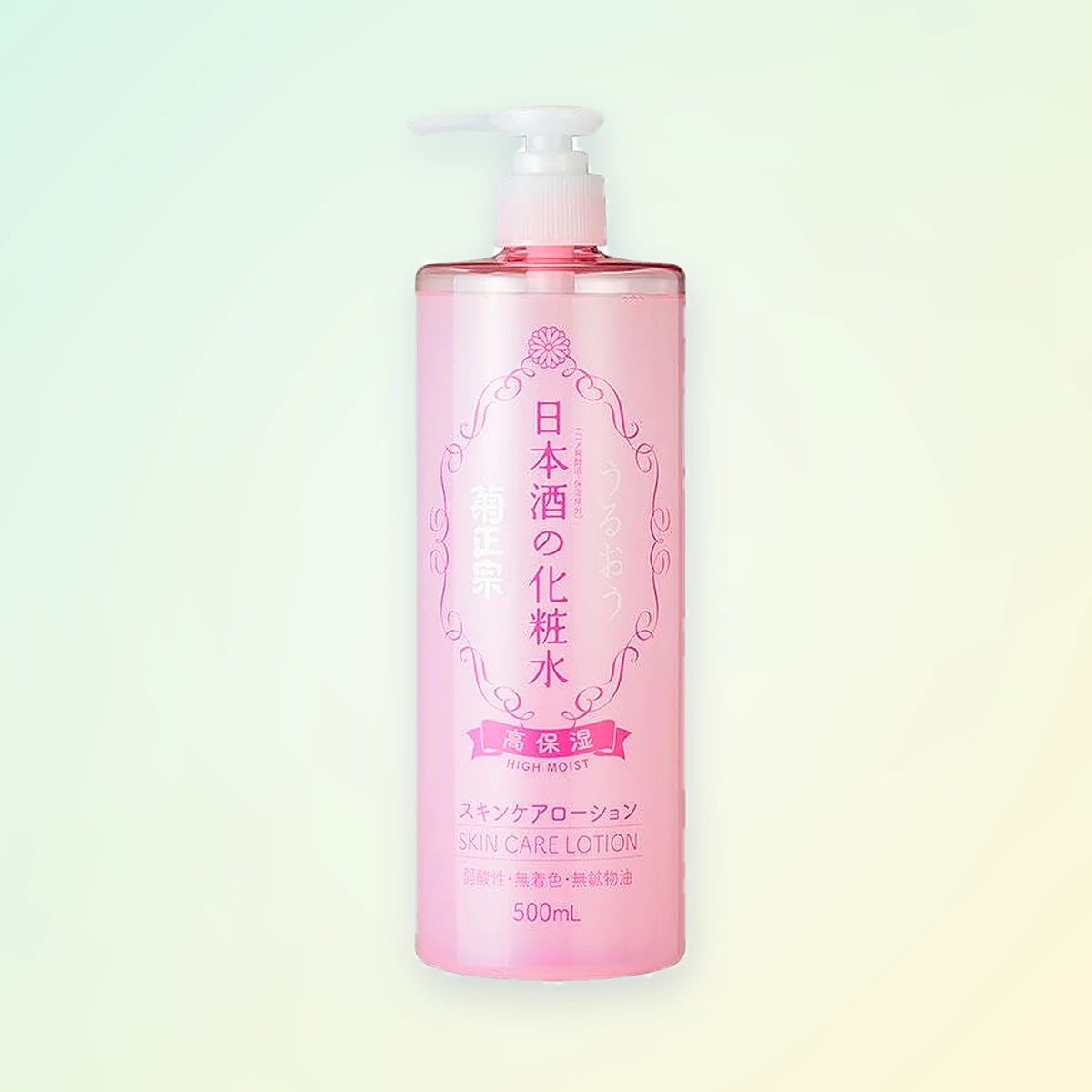
Photo: the brewer’s official shop (Japanese label).
The real sake lotion: water, glycerin, BG, then rice ferment, plus ceramides and placenta extract. It also has arbutin, usually sold as a brightening ingredient; the brand says it is there for moisture. Fragrance is listed.
Slightly thick, good for dry skin and body. Skip it if fragrance bothers you.
What about SK-II? Its famous essence uses a yeast ferment, not rice, and costs $99 for 2.5 oz on its US site.
What I tell my patients
- A rice toner is a moisturiser, not a treatment. It will not clear spots or acne.
- Pat it on, then a cream if you are dry. It is not an exfoliating pad like those in my toner pad guide.
- If your skin reacts easily, test a small area first, especially with fragrance or kojic acid.
FAQ
Is Korean rice toner good for oily skin?
A watery one can be, like the sensitive-skin black rice toner above. Dry skin usually needs a cream on top, or a slightly thicker lotion like the sake lotion. If you break out easily, try a small area first.
Is rice water for skin the same as rice toner?
Not quite. Homemade rice water is starch rinsed off rice, with no preservative, so it spoils. A rice toner is a preserved product with humectants and a measured amount of rice extract or ferment.
Do you wipe off Korean toner?
No. Pat it in with your hands and leave it on; it is a moisturiser. Wiping with cotton is for American-style alcohol toners, and exfoliating toner pads are a different product.
As an Amazon Associate I earn from qualifying purchases. This article contains affiliate links: if you buy through them, I may earn a small commission at no extra cost to you. It does not change what I recommend.
References
- Heo Jun. Donguibogam (1613), Tangaek (herbal) chapter, grain section, entries 粳米 (rice), 酒 (wine) and 糟 (wine lees). English rendering by the author from the standard Korean translation.
- Kim HJ. 조선시대 세안(洗顔)문화에 대한 고찰 (Face-washing culture in the Joseon dynasty). Journal of East Asian Cultures (동아시아문화연구) 2016;65:39-61. doi:10.16959/jeachy..65.201605.39
- SK-II. Our story: PITERA origin. Brand website, accessed 2026-10-01.
- Sansho Pharmaceutical. 日本の美白の歴史とは? 初めて美白有効成分が承認されたのは1988年! vol.1 (2024). Company website, accessed 2026-10-01.
- SAKETIMES. 杜氏の手がきれいではない理由 (Why brewers’ hands are not pretty), 2014. sake-times.com
- Kose. コウジ酸の開発秘話 (The story of kojic acid). Company website, accessed 2026-10-01.
Disclaimer: I write about cosmetics and shops based on clinical experience. Product mentions reflect my clinical opinion; availability and formulas change, so check the current label. Skin responds differently from person to person, so patch test anything new, and see a doctor about a skin condition.

14 years in practice · replies to messages herselfPhysician in non-surgical aesthetic medicine, practising in Ansan, South Korea. Every article here is written from clinical practice and the published literature.
About the author · Contact