
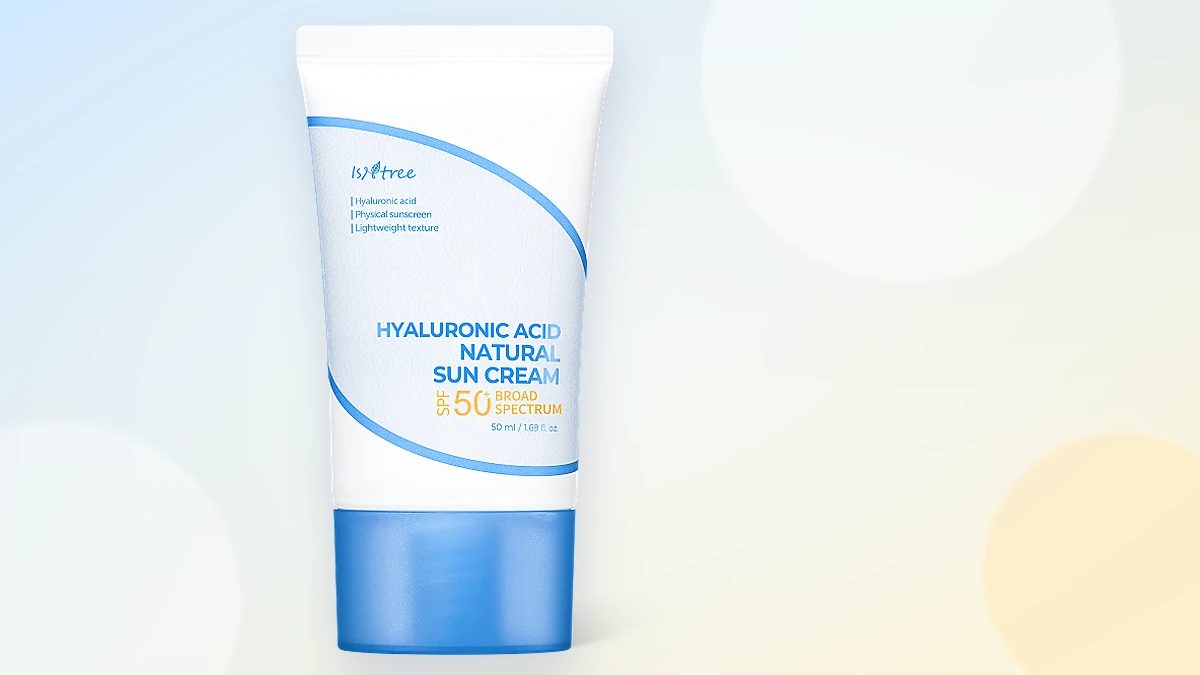
Every US sunscreen label carries the same line: “keep out of eyes.” Some make that harder than others.
Short answer:
- No sunscreen is sting-proof. Sweat carries it from your forehead into your eyes.
- Less likely to sting: zinc oxide or titanium dioxide only, no fragrance, no essential oils, no alcohol.
- My pick: Isntree’s zinc-only sun cream. Two fragrance-free chemical options if white cast bothers you.
Why does sunscreen sting my eyes?
Your forehead is the sweatiest part of your face, so sweat carries sunscreen down. And some filters, such as octocrylene, switch on a pain receptor even though they pass eye-safety tests [1]. The full story is in why sunscreen burns your eyes.
What should I look for on the label?
- Only zinc oxide and/or titanium dioxide. This is the American Academy of Dermatology’s (AAD) advice when “skin stings or burns” with sunscreen [2].
- No fragrance. Also from the AAD [2]. I count essential oils (lavender, chamomile, pine) as fragrance too.
- No alcohol (ethanol). A US dermatologist interviewed by TODAY blames the filters themselves, plus alcohols, fragrances and preservatives [3]. Cetyl or behenyl alcohol are different: waxy thickeners.
- No octocrylene, if sunscreen has stung you before [1].
How strong is this? No study I found compares eye stinging between mineral and chemical sunscreens. I take advice for stinging skin and apply it to the eyes: clinical judgement, not a proven fact.
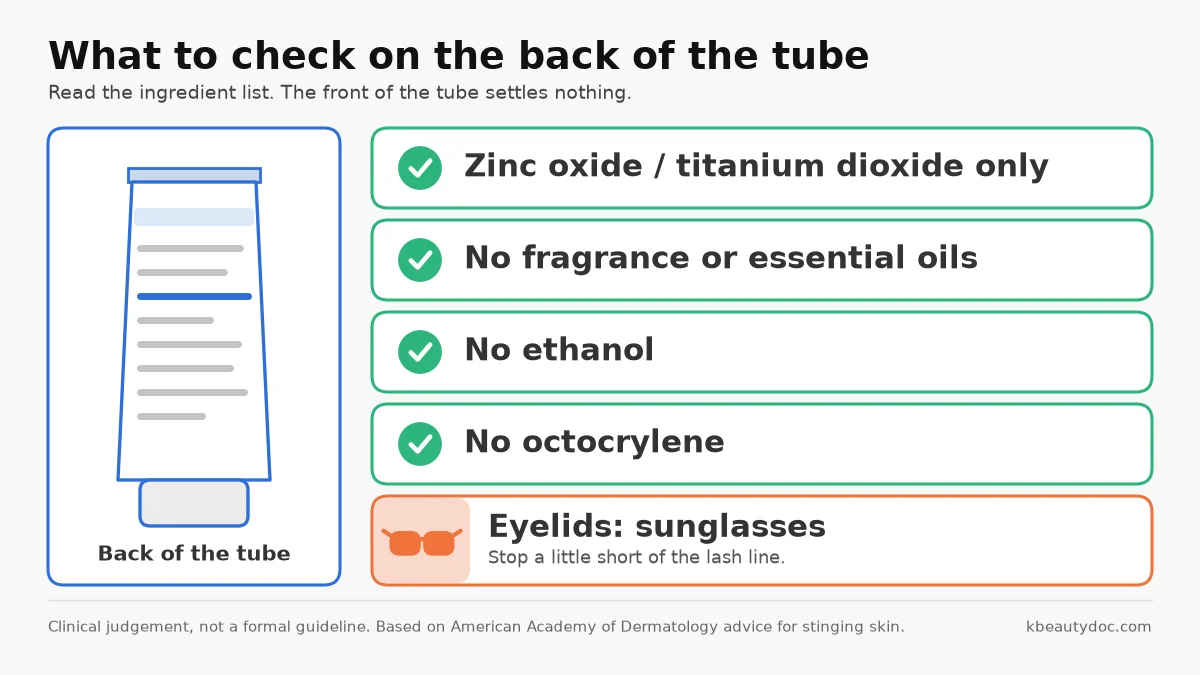
Four things to check on the back of the tube.
“For sensitive skin” on the front settles nothing. I found mineral sunscreens sold that way whose US labels list essential oils, one with alcohol too. Read the inactive ingredients.
Which Korean sunscreens are less likely to sting?
Want every box ticked?
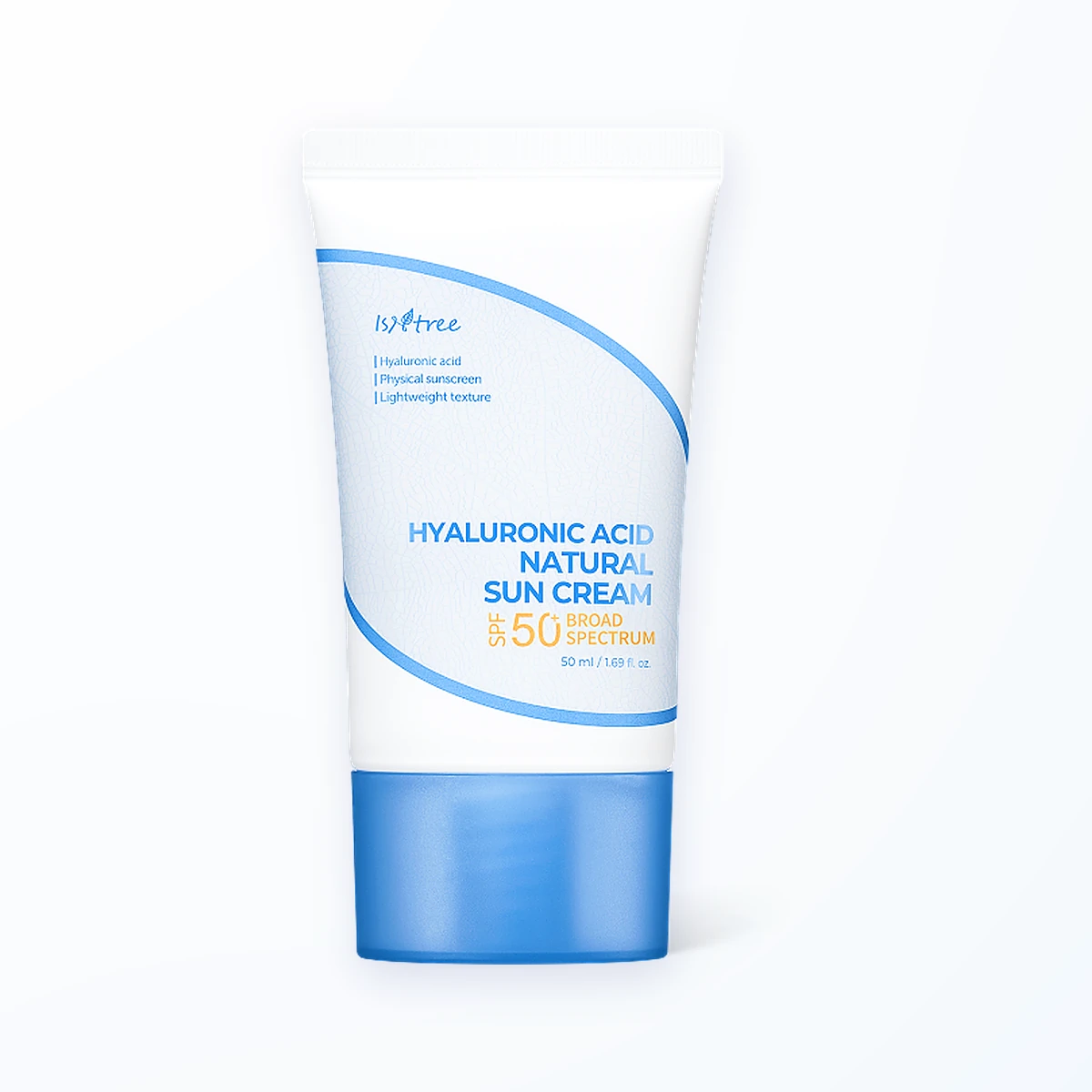
Photo: the brand’s official store.
Zinc oxide 17.8% is the only filter on its US drug label. No fragrance, essential oil or ethanol is listed [4]. SPF 50, per the brand’s listing.
The trade-off is white cast. Reviewers often mention a white tint that takes a while to fade, especially on darker skin.
Similar label: Dr.G Green Mild Up Defense Mineral Sunscreen (zinc oxide 18.24%, no fragrance listed) [5]. It was out of stock on Amazon US when I checked.
Hate white cast? The Korean favourite
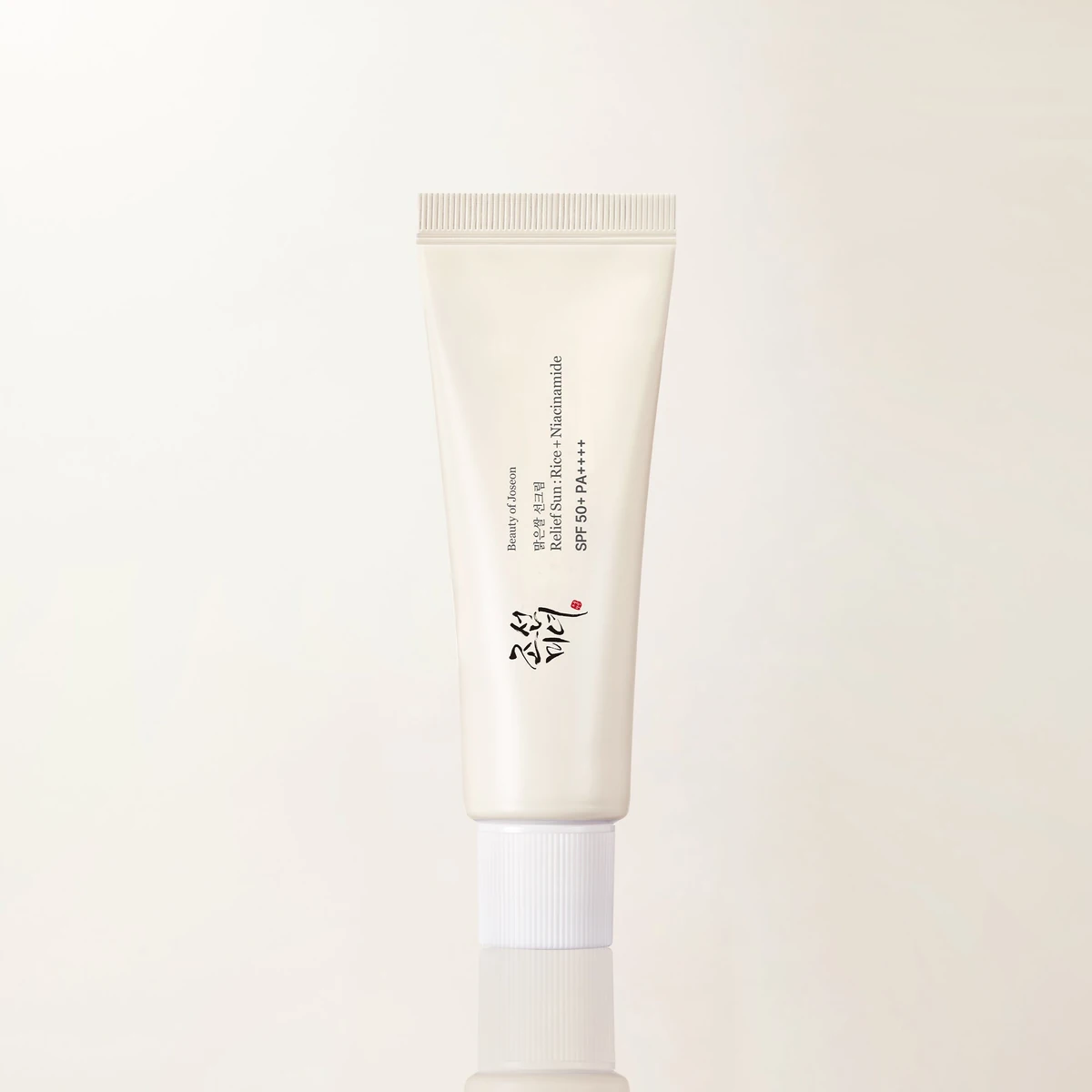
Photo: the brand’s official store.
Four chemical filters, none of them octocrylene, avobenzone or oxybenzone. The brand lists it as fragrance-free and alcohol-free, and no fragrance or essential oil appears in its ingredients [6]. The brand says no white cast.
I am not linking it. I found no US drug label for it, and on Amazon US only third-party sellers. Buy it from the brand, or in Korea.
Want a US-labelled chemical option?
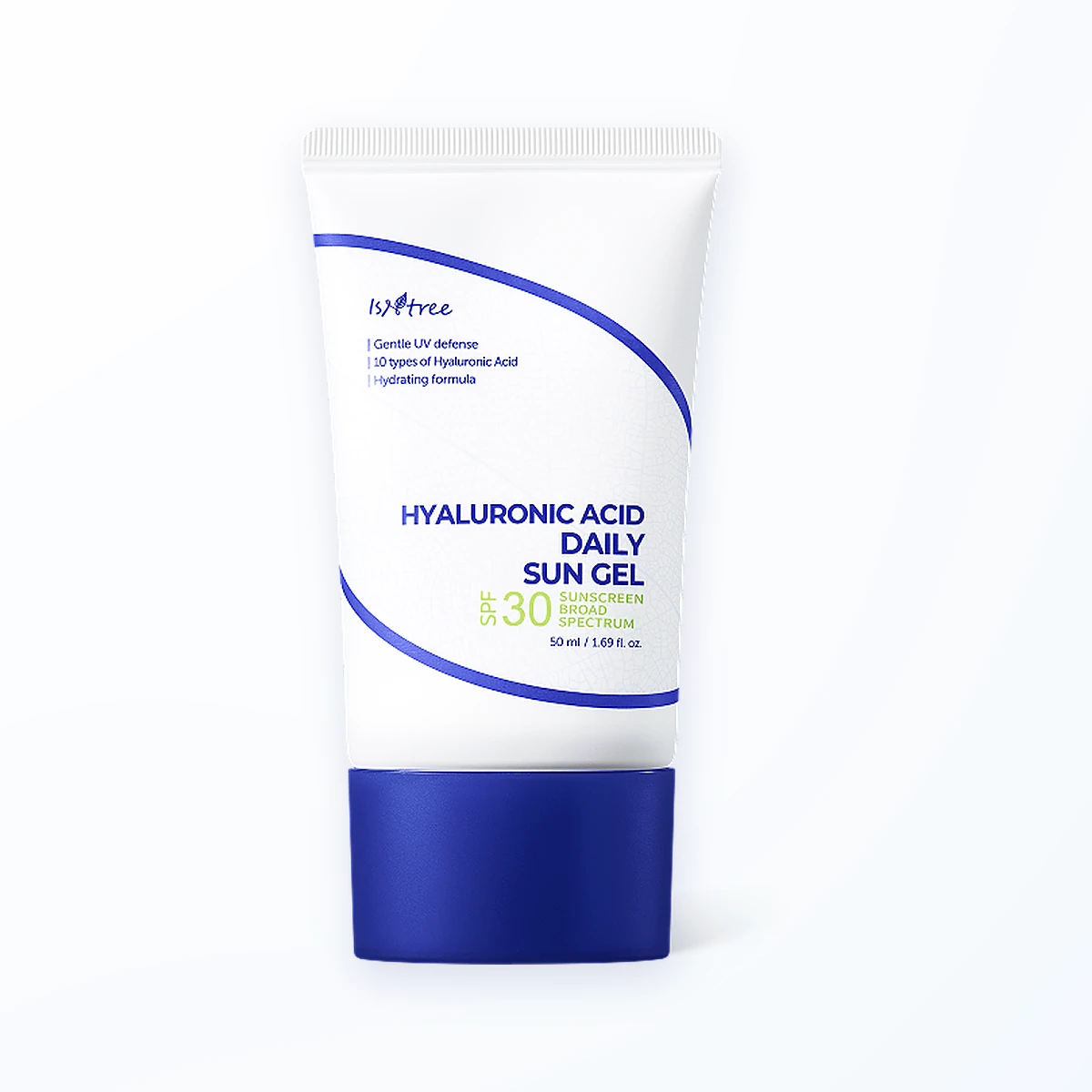
Photo: the brand’s official store.
Avobenzone, homosalate and octisalate; no octocrylene. No fragrance, essential oil or ethanol on the US label [7]. A light gel-cream, SPF 30.
Honest note: on its Amazon page, reviews that mention eyes are split. Try it on an ordinary day first.
Are any of them water resistant?
No. The US labels above say to use a water-resistant sunscreen if swimming or sweating [4, 5, 7].
For a hot, sweaty day, the AAD suggests a water-resistant stick around the eyes, so nothing drips [2]. Check that stick’s label too. The Abib stick I reviewed contains octocrylene. I keep sticks like that away from stinging eyes.
What I tell my patients
- Put it on 15 to 20 minutes before going out, so it sets before you sweat.
- Stop a little short of the lash line. Let wraparound sunglasses cover the lids.
- If it gets in, rinse with lukewarm running water. Don’t rub.
- SPF, PA and filter names are explained in my Korean sunscreen label guide.
FAQ
What sunscreen doesn’t burn your eyes?
None is certain to be sting-free. Less likely: zinc oxide or titanium dioxide only, no fragrance, essential oils or alcohol, kept a little short of the lash line.
What ingredient in sunscreen burns your eyes?
No single culprit. Octocrylene switched on a pain receptor in lab tests [1]; dermatologists also point to fragrance, alcohol and preservatives [3]. Sweat matters as much as the formula.
Is mineral sunscreen better for sensitive eyes?
The AAD suggests zinc oxide or titanium dioxide only for skin that stings [2]. No study I found tested eyes: worth trying, not proven.
As an Amazon Associate I earn from qualifying purchases. This article contains affiliate links: if you buy through them, I may earn a small commission at no extra cost to you. It does not change what I recommend.
References
- Zhang T, Sun F, Liu Y, et al. Leveraging a TRPV1-overexpressing cell model: an integrated testing strategy for UV filter-induced ocular irritation. Cutaneous and Ocular Toxicology 2026;45(2):243-250. PMID 41985167
- American Academy of Dermatology. How to choose the right sunscreen (last updated 25 Apr 2024). aad.org
- TODAY. “Tired of Sunscreen Stinging Your Eyes?” Shopping article with comments from dermatologists Lauren Penzi, MD, and Azadeh Shirazi, MD (updated 2 Jul 2026). today.com
- US National Library of Medicine, DailyMed. ISNTREE Hyaluronic Acid Natural Suncream (zinc oxide) label, effective 29 Aug 2026. DailyMed
- US National Library of Medicine, DailyMed. Dr.G Green Mild Up Defense Mineral Sunscreen (zinc oxide) label, effective 28 May 2026. DailyMed
- Beauty of Joseon. Relief Sun: Rice + Niacinamide, product page and full ingredient list. Accessed 2026-10-02.
- US National Library of Medicine, DailyMed. ISNTREE Hyaluronic Acid Daily Sungel (avobenzone, homosalate, octisalate) label, effective 27 Aug 2026. DailyMed
Disclaimer: I write about cosmetics and shops based on clinical experience. Product mentions reflect my clinical opinion; availability and formulas change, so check the current label. Skin responds differently from person to person, so patch test anything new, and see a doctor about a skin condition.

14 years in practice · replies to messages herselfPhysician in non-surgical aesthetic medicine, practising in Ansan, South Korea. Every article here is written from clinical practice and the published literature.
About the author · Contact