
About one in four people who groom their pubic hair say they have hurt themselves doing it, and cuts are the most common injury [1].
Short answer:
- Thick, curly bikini hair? Trim first, then shave. A trimmer cuts long hair short without shaving the skin, so the razor only meets stubble.
- Cuts every time? Use a fresh blade, go with the hair, and press lightly.
- Red, stinging bumps afterwards? In my clinic those are usually small shaving wounds from pressing hard and going over the same spot, plus an inflamed hair follicle. Trim instead of shaving close for a while.
Why does the bikini line cut so easily?
In a US survey of 7,570 adults, 27% of women who groomed had been injured, most often on the pubic mound and inner thigh [1]. In a clinic survey of 333 women, 60% had at least one problem from hair removal, mostly scraped skin and ingrown hairs [2].
What makes bikini hair different?
Bikini hair is terminal hair: the thick, dark, coarse kind, often thicker and curlier than leg hair. If fine body hair is sewing thread, bikini hair is fishing line.
Three things matter to a razor:
- It grows from a curved root. A hair grows out of a follicle, a tiny tube in the skin. In curly hair that tube is bent at the bottom, so the hair keeps its curl [3].
- It leaves the skin at a low angle. In the pubic area and armpits, curly hair tends to come out almost flat against the skin [4].
- The skin around it is soft and folded. It bunches and bulges when you press.
Now picture a razor meeting long, thick, curly hair. The hair packs between the blades and slows them. You press harder and go over the same spot again. That is the cut. This is my clinical explanation, not something a study has measured.
The bumps come later. What I see in my clinic is mostly skin scraped by repeated, hard passes: it stings or itches, and the skin over each hair is slightly raised, which is the follicle reacting. A shaved curly hair can also curve back and poke into the skin beside it, and the body reacts as if it were a splinter [5], but that is the less common picture.
Trimmer vs razor: which one first?
Both, in that order, if your hair is thick.
A trimmer has teeth behind a guard. It shortens hair without shaving the skin bare, so in normal use it rarely cuts. It cannot give a smooth finish.
A razor gives the smooth finish but works hardest on long, coarse hair. Trim first, and the razor only meets stubble: fewer passes, less pressure, fewer nicks. If you get bumps every time, stop after the trimmer.
What I tell my patients before a bikini shave
- Trim to short stubble first.
- Shave at the end of a warm shower. Warm water softens hair, so it is less likely to curve into the skin [7].
- Use a shaving gel, go in the direction the hair grows, and rinse the blade after every stroke [6].
- Don’t pull the skin tight [8].
- Rinse the razor, keep it clean and dry after every use, and throw it away after five shaves at most. A dull blade raises the risk of bumps [6][8].
Going fully bare again and again also adds up. In the US survey, women who had removed all their pubic hair 11 or more times had about twice the odds of injury [1].
Which tool fits your problem?
Thick, curly hair that clogs the razor
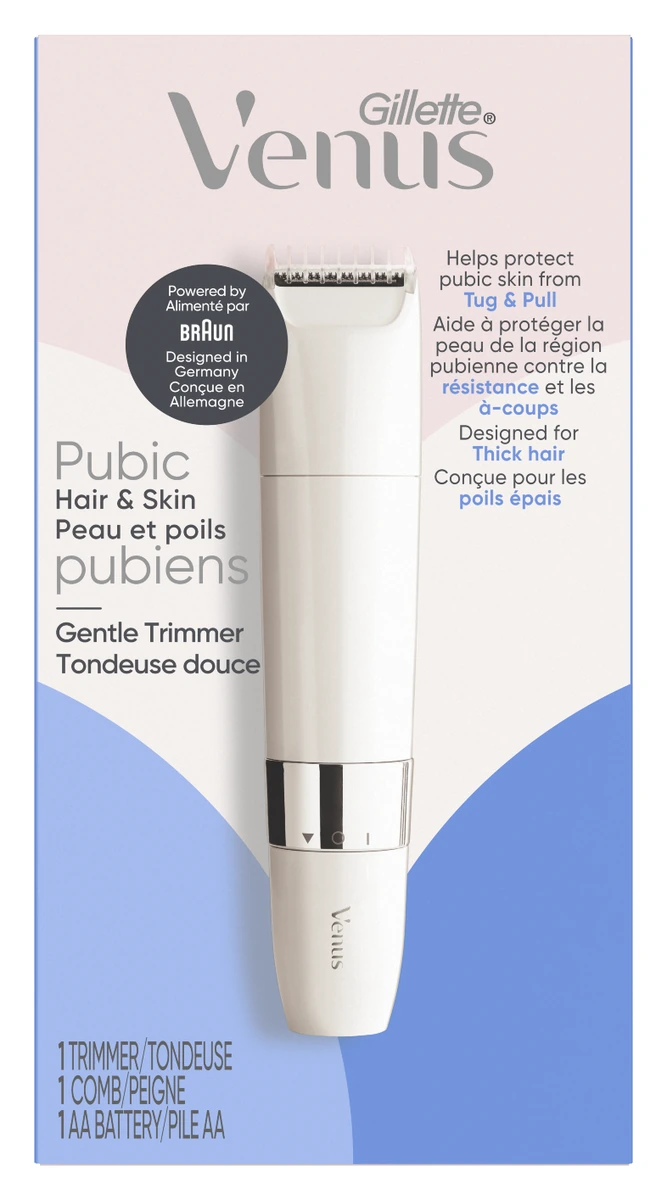
Photo: the brand’s official site.
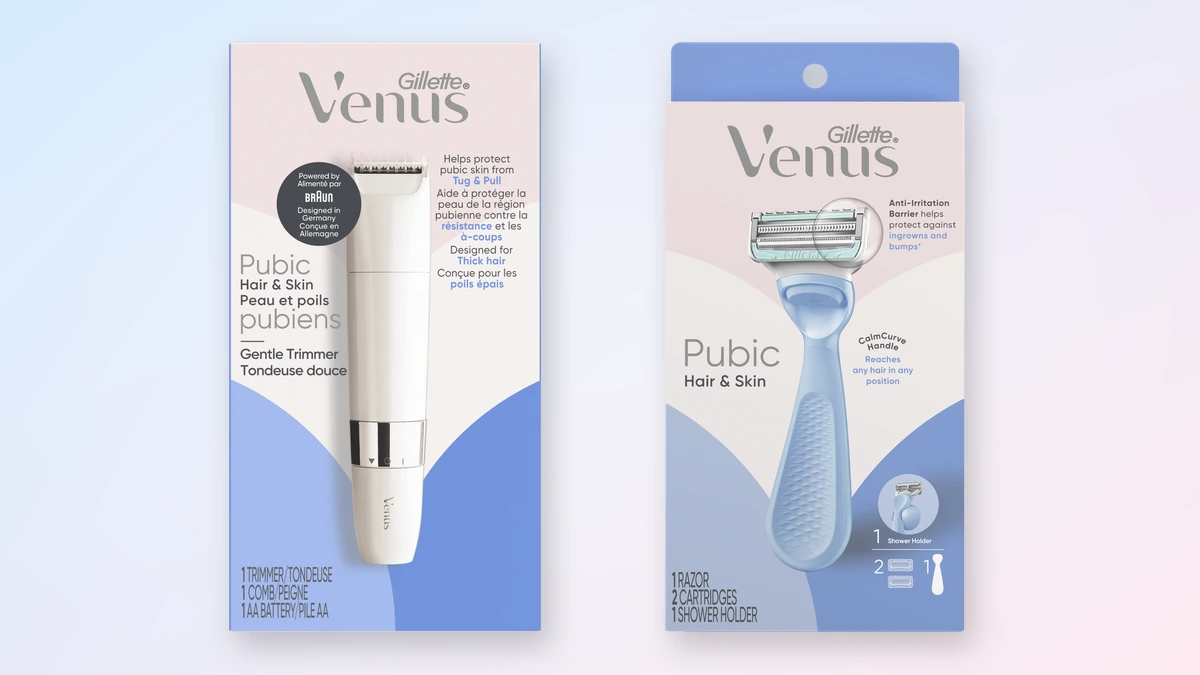
Per the brand’s site, the Venus Pubic Hair & Skin Gentle Trimmer is waterproof, has “skin protection fins,” and is “specifically designed to work with thick hair.” It comes with one comb and one AA battery.
Cuts every time you shave
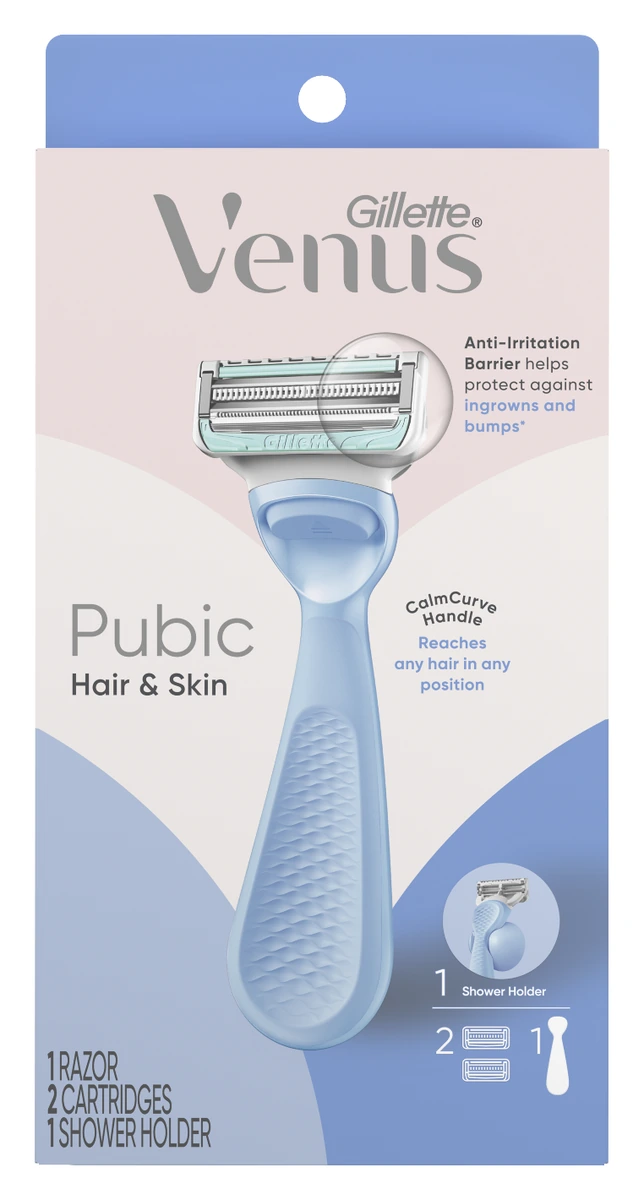
Photo: the brand’s official site.
Gillette says the Venus Pubic Hair & Skin Razor has an “Anti-Irritation Barrier” so the blades “cut hair while barely touching the skin,” a small head for tricky areas, and a back blade for shaping the edge. It comes with one handle and two refills. Those are the brand’s claims; in my clinical judgement, a fresh blade and a light hand matter more than any one model.
Bumps after every shave
No product fixes this alone. Dermatologists’ first tip for razor bumps is to stop shaving and let the hair grow [7]; trimming only is the halfway step. If a bump is painful, keeps coming back, or fills with pus, see a doctor.
Laser hair removal aims at the dark pigment in thick hair, takes a series of sessions, and reduces regrowth rather than ending it. What does change: the hair that returns grows in finer and much more slowly, so shaving becomes far easier. It needs pigment to work, so do it before the hairs turn grey or white. I cover what trials show for shaving bumps in Does laser hair removal help acne?, and home devices in Is IPL or laser better for home hair removal?
Read next
- Is IPL or Laser Better for Home Hair Removal?
- Does Laser Hair Removal Help Acne? What the Trials Show
FAQ
Is it better to use a trimmer or a razor on the bikini line?
For thick, curly hair, use both: the trimmer first, then the razor. A trimmer alone leaves short stubble and rarely cuts. A razor alone has to fight long hair, and that is when nicks happen.
How do I shave my bikini line without cutting myself?
Trim first, shave at the end of a warm shower with gel, go in the direction the hair grows, press lightly, rinse after every stroke, keep the razor clean and dry, and throw it away after five shaves at most.
Why do I get red bumps after shaving my bikini area?
Most often the skin has been scraped by pressing hard and repeating passes, and the hair follicle is inflamed; sometimes a curly hair is growing back into the skin beside it. Trimming instead of shaving close often helps. See a doctor if bumps are painful, keep coming back, or fill with pus.
As an Amazon Associate I earn from qualifying purchases. This article contains affiliate links: if you buy through them, I may earn a small commission at no extra cost to you. It does not change what I recommend.
References
- Truesdale MD, Osterberg EC, Gaither TW, et al. Prevalence of pubic hair grooming-related injuries and identification of high-risk individuals in the United States. JAMA Dermatol 2017;153(11):1114-1121. 10.1001/jamadermatol.2017.2815
- DeMaria AL, Flores M, Hirth JM, Berenson AB. Complications related to pubic hair removal. Am J Obstet Gynecol 2014;210(6):528.e1-5. 10.1016/j.ajog.2014.01.036
- Thibaut S, Gaillard O, Bouhanna P, et al. Human hair shape is programmed from the bulb. Br J Dermatol 2005;152(4):632-638. 10.1111/j.1365-2133.2005.06521.x
- Puhan MR, Sahu B. Pseudofolliculitis corporis: a new entity diagnosed by dermoscopy. Int J Trichology 2015;7(1):30-32. 10.4103/0974-7753.153453
- Ogunbiyi A. Pseudofolliculitis barbae; current treatment options. Clin Cosmet Investig Dermatol 2019;12:241-247. 10.2147/CCID.S149250
- American Academy of Dermatology. Hair removal: how to shave. aad.org
- American Academy of Dermatology. 6 razor bump prevention tips from dermatologists. aad.org
- American Academy of Dermatology. Razor bump remedies for men with darker skin tones. aad.org
Disclaimer: Home devices should be used according to the manufacturer’s manual and safety instructions, which take priority over anything I write here. Device approvals and permitted claims differ from country to country. Product mentions reflect my clinical opinion; availability and models change, so check the current manual and listing before you buy.

14 years in practice · replies to messages herselfA doctor in Korea, in practice since 2012 — your K-Beauty Doc. Physician in non-surgical aesthetic medicine, practising in Ansan, South Korea. Every article here is written from clinical practice and the published literature. Not medical advice.
About the author · Contact