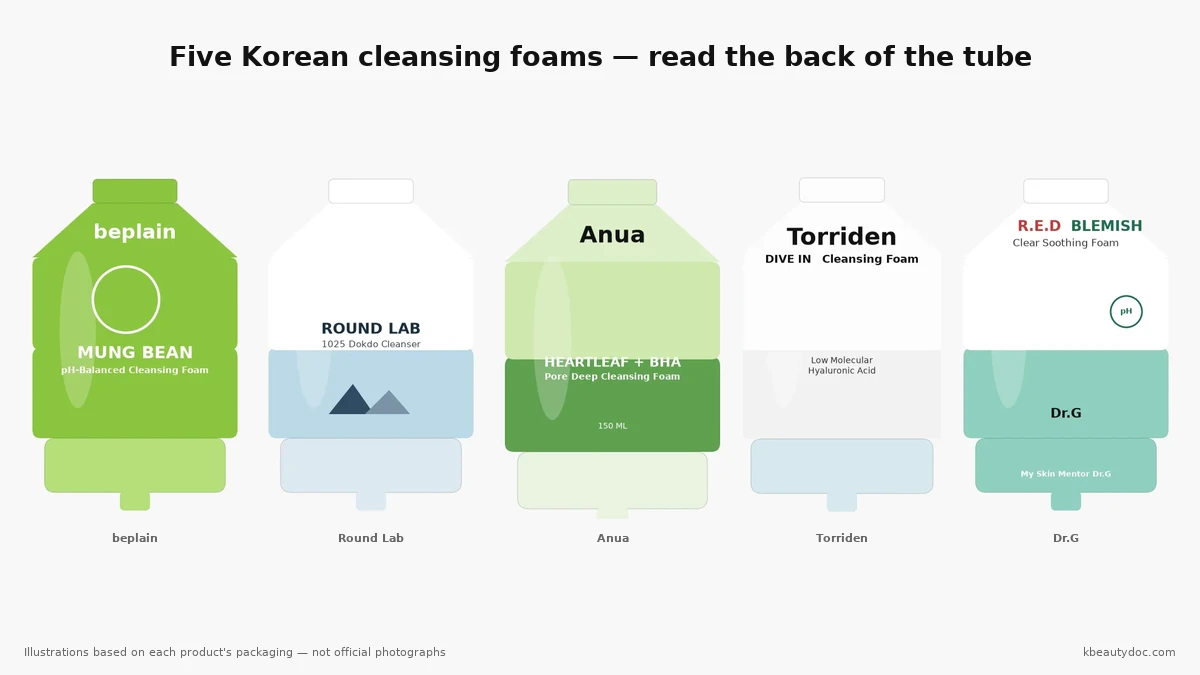
The short answer
Five tubes, one shelf, and the real differences are smaller than the packaging suggests. Three things on the back of the tube decide almost everything:
- the surfactant system — the detergents that do the washing
- whether an active has been added — a salicylic-acid derivative, centella, hyaluronic acid
- what has been left out — fragrance, alcohol, sulfates
Everything else is a story about an island, a bean or a leaf.
These tubes arrive in my consulting room in shopping bags. Below is what each brand publishes on its own site, read in September 2026.
1. beplain Mung Bean pH-Balanced Cleansing Foam
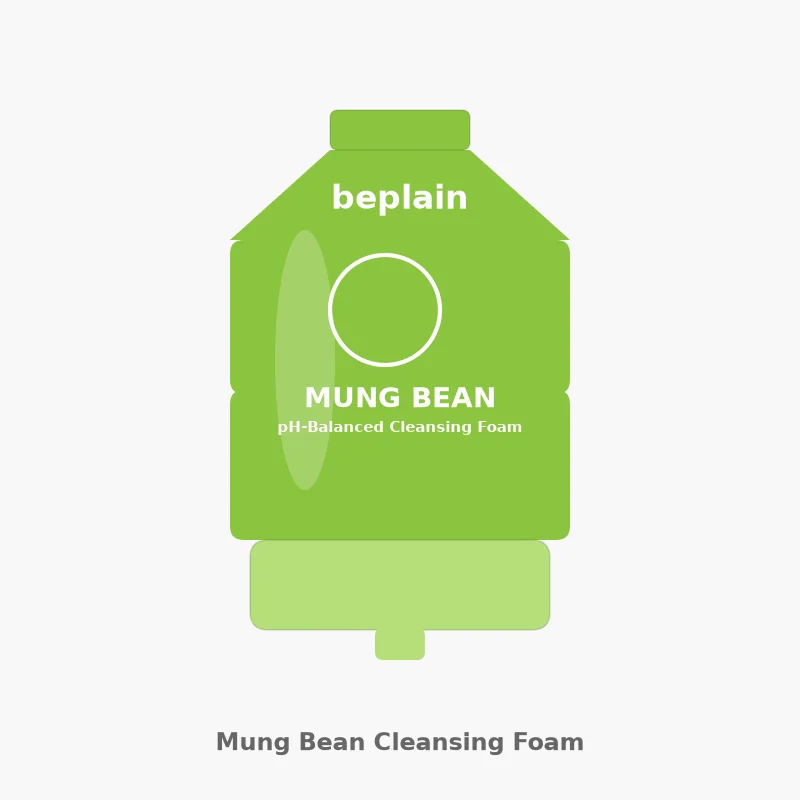
Illustration based on the product packaging; reference: beplain official website (beplain.co.kr)
The wash comes from sodium cocoyl glycinate and sodium lauroyl glutamate — both amino-acid derived — with lauryl betaine secondary. No sulfates. Mung bean seed powder is declared at 9,000 ppm and the extract at 3,300 ppm; ceramide NP and sodium hyaluronate sit near the end. No fragrance. There is alcohol, fourteenth on the list, which matters only if ethanol reliably stings you. The 80 ml tube lists at ₩15,000. The brand calls it pH-balanced but does not print a number.
2. Round Lab 1025 Dokdo Cleanser
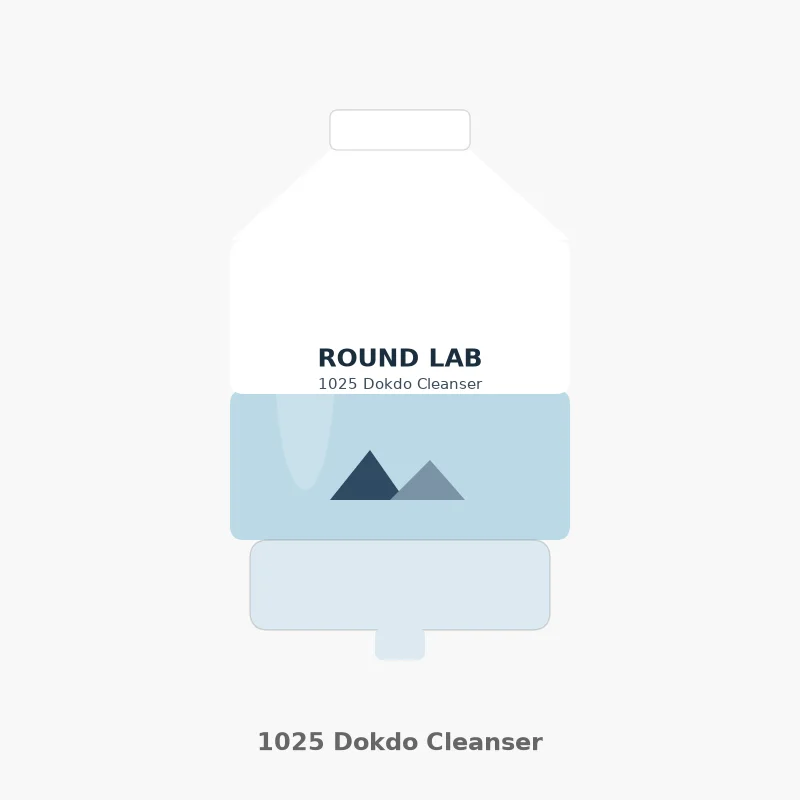
Illustration based on the product packaging; reference: Round Lab official website (roundlab.com)
The only one of the five that publishes an actual pH: 5.0–6.0, on Round Lab’s own page, 150 ml at $15. The cleansing system is a different family from beplain’s — sodium cocoyl isethionate and sodium methyl cocoyl taurate lead, followed by coco-betaine, potassium cocoyl glycinate and a little potassium cocoate, a genuine soap salt. Isethionates and taurates are the syndet-bar surfactants, and they lather densely. Ceramide NP, panthenol and allantoin are declared. The page says unscented, yet chamomile flower oil is listed — “unscented” means no added perfume, not no plant volatiles.
3. Anua Heartleaf Quercetinol Pore Deep Cleansing Foam
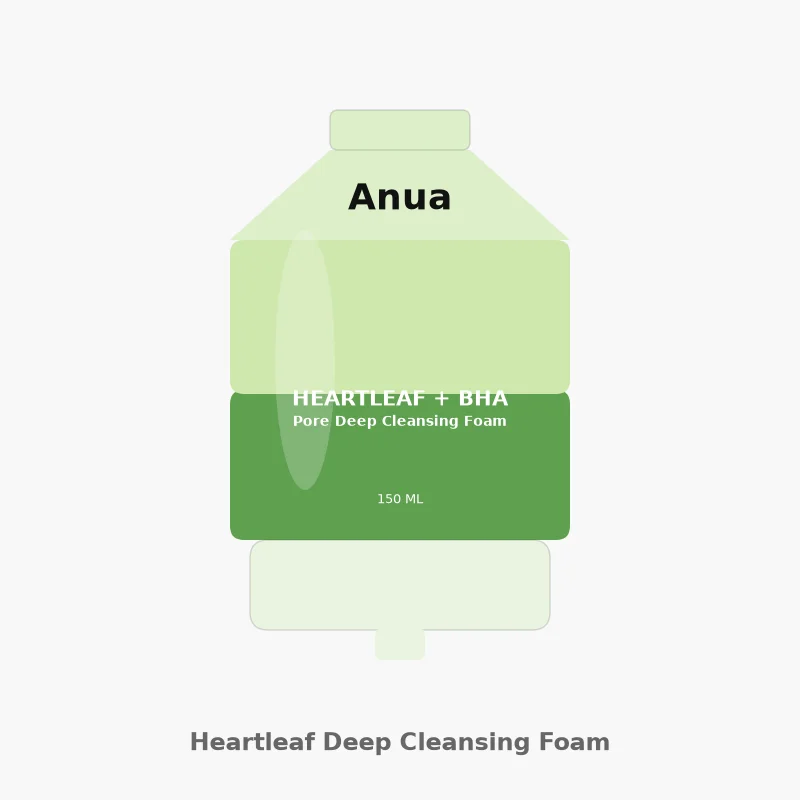
Illustration based on the product packaging; reference: Anua official website (anua.com)
The most active formula of the five. Heartleaf (Houttuynia cordata) water is the first ingredient, ahead of water itself. The wash is sodium cocoyl glycinate and sodium lauroyl glutamate plus two sugar-derived glucosides. What sets it apart is the BHA: betaine salicylate and capryloyl salicylic acid are both declared, and eucalyptus leaf oil is present. 150 ml, $20. Anua publishes no pH figure — worth noticing on a product sold on gentleness — but does publish in-house consumer-test percentages, which are marketing studies, not trials.
4. Torriden DIVE-IN Low Molecular Hyaluronic Acid Cleansing Foam
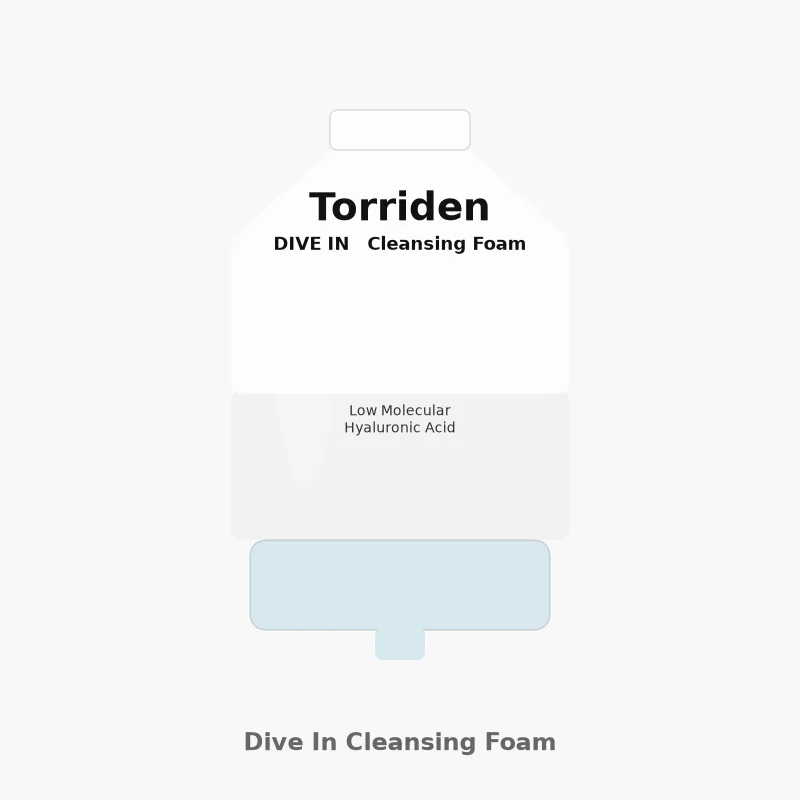
Illustration based on the product packaging; reference: Torriden official website (torriden.com)
The shortest, plainest list here. Two amino-acid surfactants, then eight forms of hyaluronic acid in a row, then panthenol, allantoin and trehalose. No fragrance, no alcohol, no sulfates. 150 ml at ₩15,000. The brand describes it as slightly acidic without printing a value. A cleanser is rinsed off within a minute, so the reason to buy this is the short detergent list, not the eight hyaluronic acids.
5. Dr.G R.E.D Blemish Clear Soothing Foam
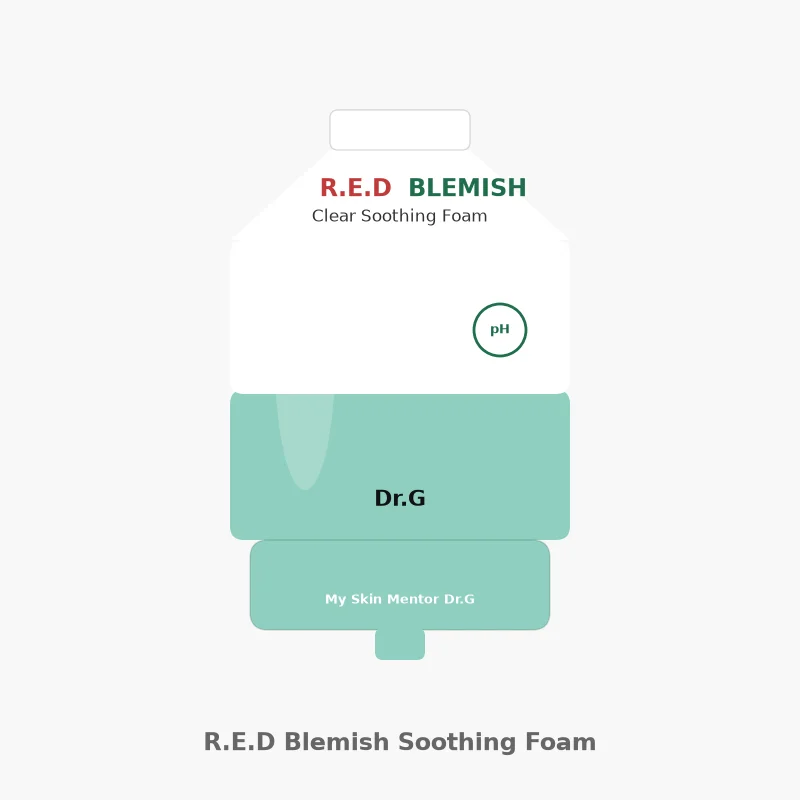
Illustration based on the product packaging; reference: Dr.G official global website (dr-g.com)
The tube reads “pH Balancing Formula, 10-CICA Complex”. The surfactants are the isethionate–taurate–betaine family again, closer to Round Lab than to Torriden. Salicylic acid is declared, as are four centella molecules — madecassoside, asiaticoside, madecassic acid, asiatic acid — and several ferment filtrates. No fragrance, no denatured alcohol, no sulfates. 150 ml, $20.
Which differences actually matter
Sulfates. None of the five contains sodium lauryl or laureth sulfate. That is the norm in this price band in Korea, so not a reason to choose between them.
Added acid. Anua and Dr.G carry salicylic-acid derivatives; the other three do not. A rinse-off acid is far milder than a leave-on one, but if you already use an acid pad or a prescription topical, stacking another acid at the sink is where irritation usually starts — the same frequency logic as in the toner pad guide.
Fragrance and volatiles. Torriden, beplain and Dr.G declare no fragrance. Round Lab declares chamomile oil, Anua eucalyptus oil. If your skin is reactive, that is the single most useful line on the back.
What none of them does. A foam will not lift waterproof makeup, built on film formers — oil first, then foam.
Why Korean cleansing foams travelled so well
Part of it is retail, part of it is one piece of dermatology that happens to be real.
The acid-mantle argument holds up. Measured across hundreds of people, resting skin surface pH sits below 5, and skin in that range scored better on barrier function, moisturisation and scaling [1]. In a three-month randomised trial in acne-prone adolescents, inflammatory lesions fell with an acidic syndet bar and rose with conventional soap, with far less irritation in the syndet group [2]. A mildly acidic wash is a defensible default, and Korean brands standardised on it early.
But a low pH on the front is not a certificate. Cleansers built mainly on anionic surfactants can be more drying at skin pH than at neutral pH, because the electrostatic pull on stratum corneum protein increases [3]. What determines mildness is the surfactant head group, not the number on the box [4]. That is my main objection to how these products are sold: “pH-balanced” is printed on almost everything, and tells you less than the third and fourth lines of the ingredient list.
Then transparency and price. All five publish a complete ingredient list, in English, on their own websites — which is why an article like this can be written at all. A 150 ml tube in this group runs $15–20 abroad and ₩9,500–15,000 at home.
Olive Young and Daiso are not the same shop
All five above are Olive Young products. Daiso is a different proposition: smaller tubes, much lower prices, and a range built around a price ceiling rather than brand lines. It is a sensible place to buy travel sizes or to test whether a foam suits you — but it is not where these five live. Wider shopping route: what to actually buy in Korea.
How to choose in the store
Turn the tube over. If the first two or three surfactants end in -glycinate, -glutamate, -isethionate or -taurate, it is in the mild family. Then decide one thing: acid in the cleanser, or not. If oil and congestion are the concern, the reasoning in sebum and pores applies — the cleanser is the weakest lever you have. Buy one, not five, and do not start a new cleanser and a new sunscreen on the same day.
FAQ
Is a pH 5.5 cleanser always gentler than a pH 7 one?
No. Trial data show that cleansers built mostly on anionic surfactants can be more drying at skin pH than at neutral pH. Read the surfactants, not the number.
Which of the five is the mildest?
On the label alone, Torriden has the shortest detergent list and no fragrance, alcohol or acid. That is a comment on the formula, not a recommendation for your skin.
Can I use the Anua or Dr.G foam twice a day?
They are marketed for daily use, and a rinse-off acid is mild. If you are also using acid pads, retinoids or a prescription acne cream, that combination is worth raising with whoever prescribed it.
Does a cleanser with hyaluronic acid actually hydrate?
Barely. It is rinsed off within a minute. Humectants in a cleanser mostly make the after-feel less tight.
Are these safe after a clinic procedure?
Pause acids and fragrance while skin is healing, and ask the clinic that treated you when to restart. After injections into the dermis — Rejuran or Juvelook, for instance — the plainest low-pH wash on this list is the one I would use until the injection points close.
Is Daiso skincare lower quality than Olive Young skincare?
Different, not automatically worse. Judge the individual ingredient list the same way.
Foam cleanser or cleansing balm?
Different jobs. Balms and oils lift makeup and sunscreen; a foam removes what is left. Daily sunscreen usually means both in the evening.
References
- Lambers H, Piessens S, Bloem A, Pronk H, Finkel P. Natural skin surface pH is on average below 5, which is beneficial for its resident flora. Int J Cosmet Sci 2006;28(5):359-370. DOI: 10.1111/j.1467-2494.2006.00344.x
- Korting HC, Ponce-Pöschl E, Klövekorn W, Schmötzer G, Arens-Corell M, Braun-Falco O. The influence of the regular use of a soap or an acidic syndet bar on pre-acne. Infection 1995;23(2):89-93. DOI: 10.1007/BF01833872
- Hawkins S, Dasgupta BR, Ananthapadmanabhan KP. Role of pH in skin cleansing. Int J Cosmet Sci 2021;43(4):474-483. DOI: 10.1111/ics.12721
- Ananthapadmanabhan KP, Moore DJ, Subramanyan K, Misra M, Meyer F. Cleansing without compromise: the impact of cleansers on the skin barrier and the technology of mild cleansing. Dermatol Ther 2004;17(Suppl 1):16-25. DOI: 10.1111/j.1396-0296.2004.04s1002.x
Disclaimer: I write about cosmetics and shops as general information, not as a recommendation of any particular product or retailer. I receive no sponsorship, samples or payment from the brands mentioned. Skin responds differently from person to person, so patch test anything new, and see a doctor about a skin condition.

Physician in non-surgical aesthetic medicine, practising in Ansan, South Korea. Every article here is written from clinical practice and the published literature.
About the author · Contact