

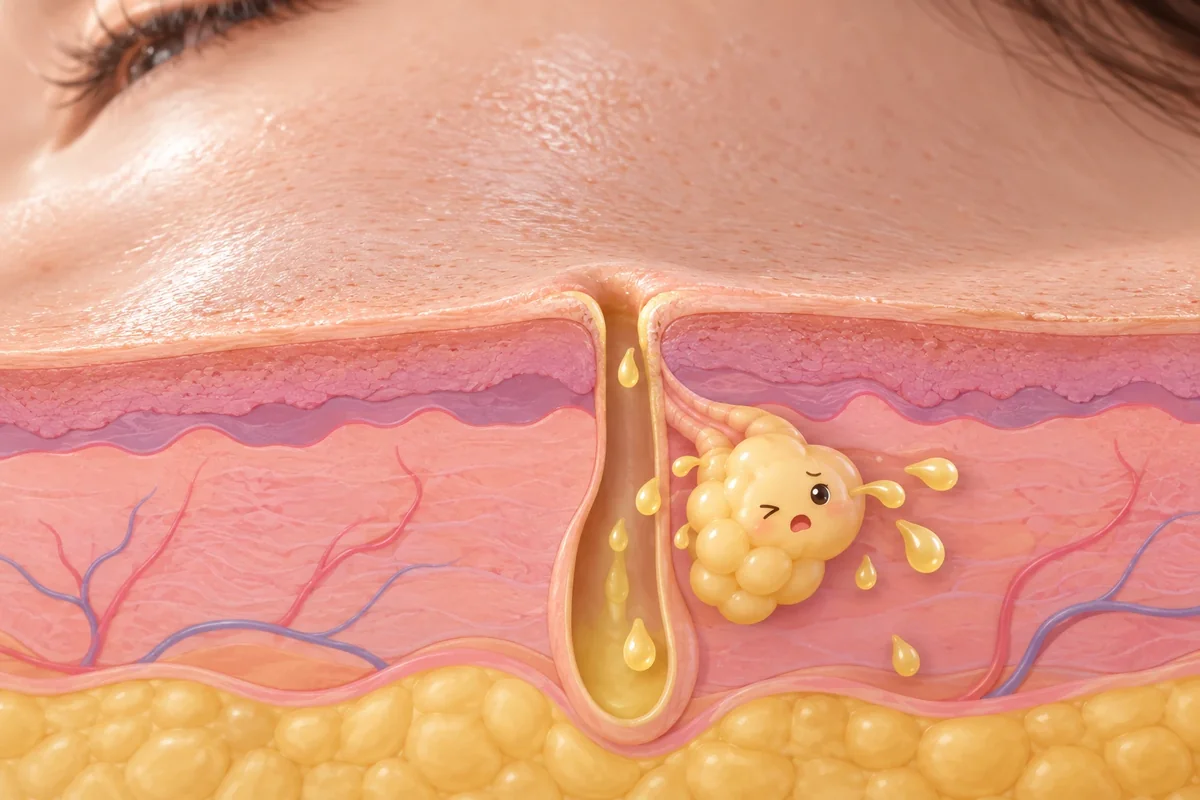
What’s skin Botox?

Regular Botox, diluted, in the skin instead of muscle.
Where’s the glow from?
Less oil and a smoother surface, not added water.
How long does it last?
Reviews report about three to six months.
Two weeks before a wedding, a common request in Korea is not a facial. It is botox — in the skin, not the muscle.
Short answer:
- Skin botox is the same botox, watered down and placed as tiny drops in the skin — not in the muscle.
- The “glow” comes from less greasy shine and a smoother surface, so light bounces off evenly. It does not add water.
- Reviews report roughly three to six months, and the research is small. It suits oily, rough-textured skin best.
Why do people in Korea book it before a big day?
In Korea you will hear it called “water-glow” skin botox. People book it before a wedding or photo shoot, hoping for skin that looks smooth and fresh with little or no makeup — the “glass skin” look.
Timing matters. It is reported to start working within about 5 to 14 days [3], so people book about two weeks ahead.
What is skin botox?
You may see it called microbotox or mesobotox.
Regular botox goes in as a few shots into a muscle. Skin botox is diluted much more and placed as many tiny drops just under the surface. There is no fixed recipe — the person injecting sets the dilution and the number of points [3].
Where does the glow actually come from?
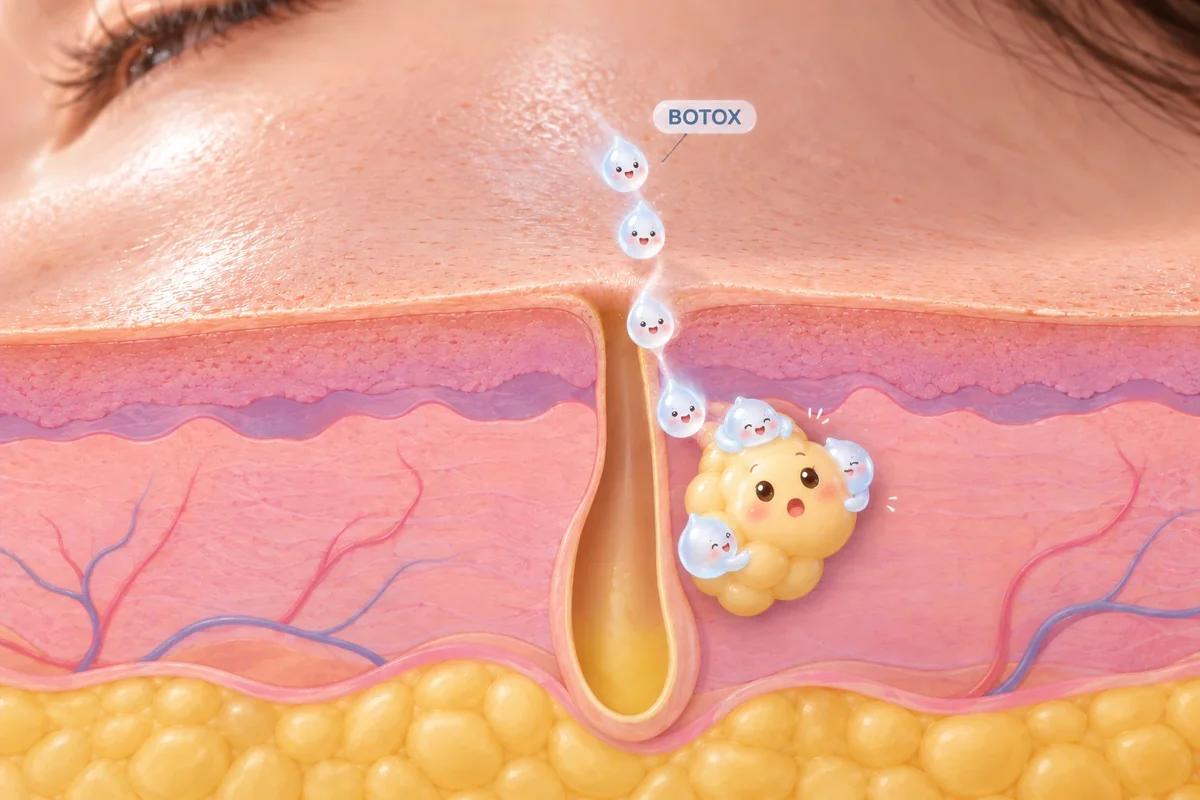
Botox blocks a nerve signal. In a muscle, that signal makes you frown. In the skin, similar signals help run oil and sweat glands.
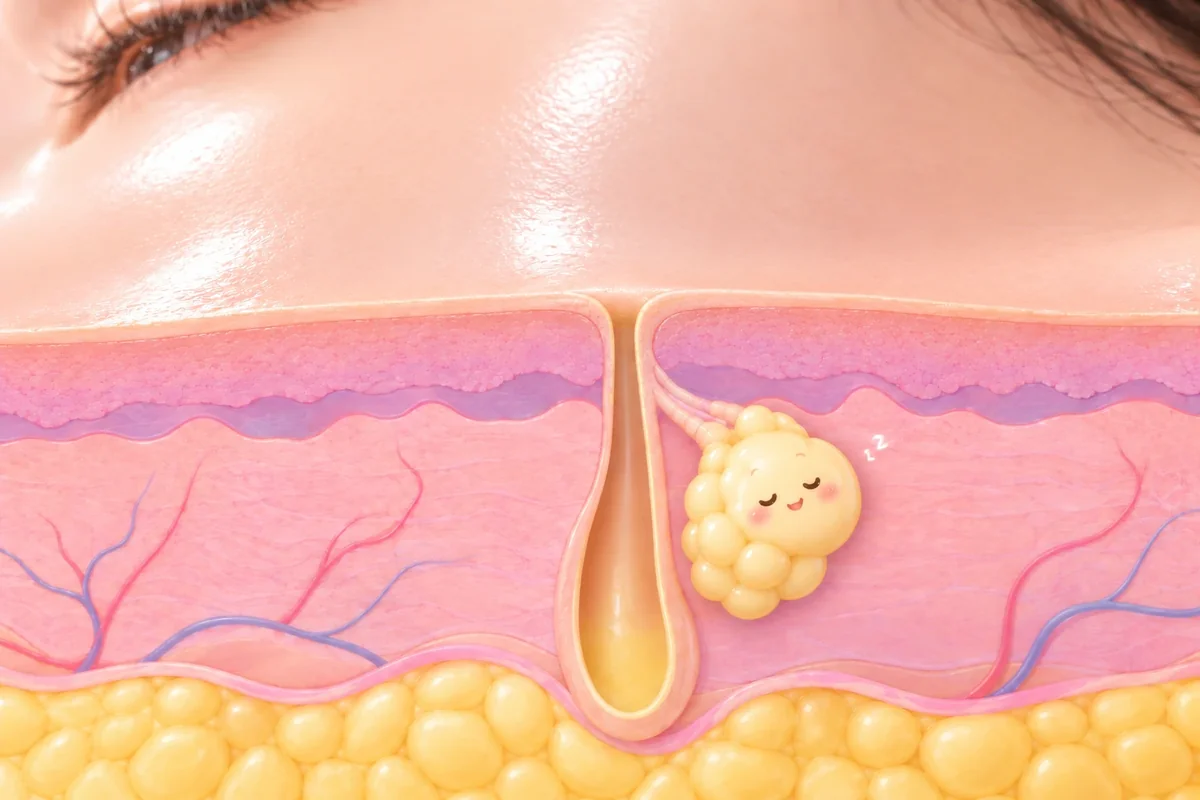
So for a few months there is less oil on the surface and less shine by the afternoon. Fine lines and pores can look softer too. A smoother surface reflects light evenly — and even reflection is what we read as “glow”.
A 2024 review of ten small studies found a positive signal for oil, pore size, redness, fine lines and texture — but not for hydration [1]. Too few people were studied to be sure. A later trial found smoother, smaller-looking pores over six months, especially in oily skin [2].
So the honest version: the glow is smoother and less oily, not wetter. If your skin looks dull because it is dry, this is the wrong tool.
Who does it suit — and who not?
My clinical judgement, not a proven fact:
Usually a good fit: oily or combination skin that shines by the afternoon, rough texture, and makeup that slides or lifts by midday.
Usually not worth it:
- Dry or thin skin — less oil will not fix dullness from dryness
- Deep, set lines — a job for muscle botox
- Pores loose with age — that is structure, not oil; see pores that changed with age
What is it often paired with in Korea?
Since it adds no water, skin botox is often done in the same visit as a skin booster — hyaluronic acid “water-glow” injections, or Rejuran. The booster works on hydration; skin botox works on oil and texture. I compare boosters in Re2O vs Rejuran vs Juvelook and the human-tissue kind here.
- Skin botox: shallow drops in the skin, for oil, shine and texture. Roughly 3–6 months in reviews; small, early studies.
- Water-glow injection / skin booster: shallow, in the skin, for hydration and skin quality. How long it lasts depends on the product; mostly small studies.
- Muscle botox: into a muscle, for lines from movement. About four months for frown lines (review); large trials over decades.
What are the side effects and limits?
Common and short-lived: small bumps, redness, and occasional bruising.
Depth is the one to know. If the drops drift into the muscle, they act like regular botox where nobody planned. Near the mouth, a smile can look uneven until it wears off.
The limits: it does not replace muscle botox for a frown line or change your skin type. When it wears off, the oil comes back.
What I actually do in clinic
A real week in clinic: the day after Chuseok, a woman in her forties came in for skin botox with one goal — a school parents’ meeting two weeks later. That is the typical timing I see: a reunion, a close friend’s or relative’s wedding, a photo day, about two weeks out, when someone wants their bare skin to look its best fast. Two weeks is enough for the effect to settle; the week of the event is too late.
What patients ask most: “Will I glow without makeup on my wedding day?” My honest answer: oily, rough skin can look smoother for a few months, and the research is thin.
What I check first: is the dullness from oil and texture, or from dryness?
What I avoid: offering it for dry skin or deep lines, and treating near the mouth without explaining the smile risk first. For a first time, I keep that area light or leave it out.
This is clinical judgement, not a proven fact. Whether it suits your skin needs someone looking at it in person.
FAQ
Is skin botox a different drug from regular botox?
No. It is the same botulinum toxin, diluted further and placed in a shallower layer.
Will my face look frozen?
That is not the aim — the drops stay above the muscle. Placed too deep near the mouth, it can soften a muscle by accident.
How close to my wedding should I book it?
About two weeks before. It takes days to start working, and bumps or a bruise need time to settle.
Does skin Botox really work?
A 2024 review of ten small studies found a positive signal for oil, pore size, redness, fine lines and texture, but not for hydration. It suits oily, rough-textured skin best, and the research is still small.
Have a question about your own case? Ask me on LINE or by email — details on the Contact page.
References
- Rahman E, Rao P, Philipp-Dormston WG, et al. Intradermal botulinum toxin A on skin quality and facial rejuvenation: a systematic review and meta-analysis. Plast Reconstr Surg Glob Open 2024;12(8):e6084. 10.1097/GOX.0000000000006084
- Vachiramon V, Chirasuthat S, Boonpethkaew S, et al. A study of combined onabotulinumtoxin A and hyaluronic acid filler for the treatment of enlarged facial pores. Toxins 2025;17(1):38. 10.3390/toxins17010038
- Iranmanesh B, Khalili M, Mohammadi S, Amiri R, Aflatoonian M. Employing microbotox technique for facial rejuvenation and face-lift. J Cosmet Dermatol 2022;21(10):4160-4170. 10.1111/jocd.14768
Disclaimer: This article explains treatments in general terms and is not a diagnosis or a treatment plan. What happens varies from person to person, and no article can tell you what to expect. Please discuss your own case with a licensed medical professional where you live. I do not endorse specific clinics or device brands.
14 years in practice · replies to messages herselfPhysician in non-surgical aesthetic medicine, practising in Ansan, South Korea. Every article here is written from clinical practice and the published literature.
About the author · Contact