
Korea has cheap clinics. Why so many creams?
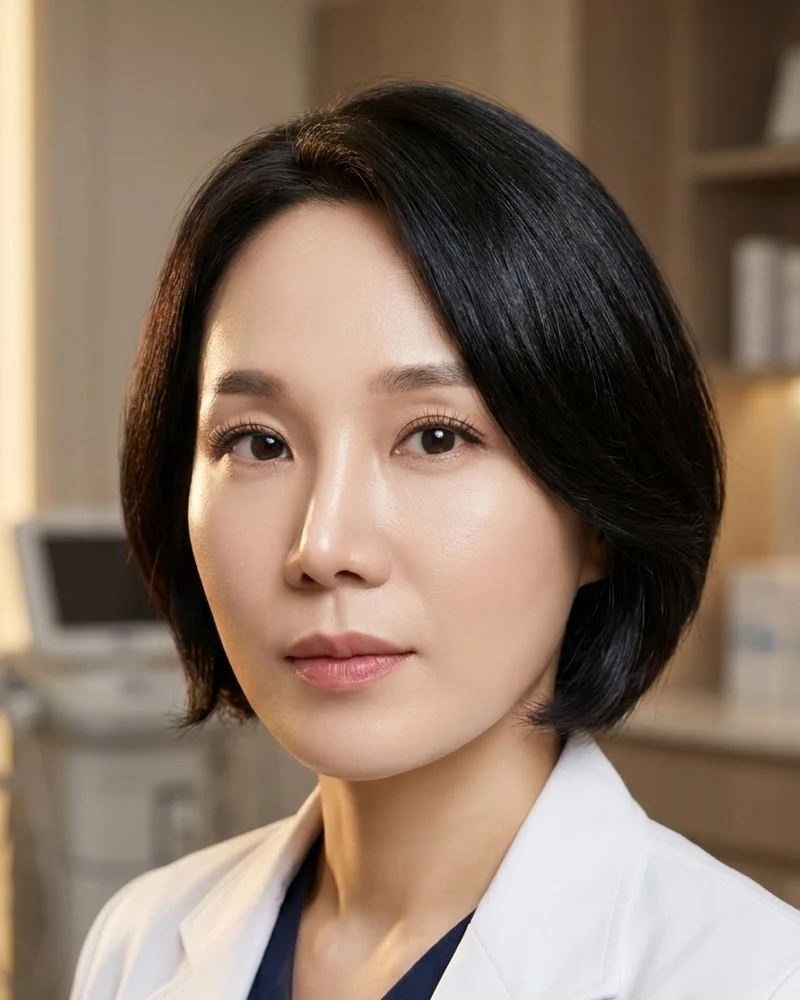
Koreans use both, and they sort them out themselves.
How do they sort them out?
Most people here know where a cream stops working.
Then why are there so many brands?
Here, anyone with an idea can hire a factory.
In 2025, Korea passed the United States to become the world’s second-largest cosmetics exporter [1]. Yet here, more than 8 in 10 new general doctors’ clinics in 2025 listed skin as their field [2].
Short answer:
- Koreans split creams and clinic treatments on their own. They know what a cream can do, and which cheaper product does the same job.
- Anyone can start a brand. Factories that make products for other brands (ODM makers) let a company launch without its own factory. Over 28,000 companies sell cosmetics, so competition is fierce.
- Olive Young, tourists and K-culture carried it abroad. The US is now the top export market.
Do Koreans really use both?
Yes, and they sort them out themselves. Many of my patients arrive with it worked out: sagging or hollow areas are for treatments; moisture, sun protection and calming are for creams. They often know a cheaper product with similar ingredients before I do.
I found no official price data, so no prices here.
Why are there so many Korean skincare brands?
Because brands can borrow a factory. ODM makers Kolmar Korea (1990) and Cosmax (1992) led the way [3]. A Korean trade paper writes that small brands with no factory or lab can now launch with just an idea and a market plan [4].
- At the end of 2025, Korea had 28,412 companies selling cosmetics and 4,158 makers. Sellers outnumber makers more than 6 to 1 [5].
Similar factories mean similar products, so brands compete on price and ideas (my reading). So read the ingredient list, not the brand name.
Did Korea’s skin clinic culture turn into cosmetics?
Partly. Dr.Jart+ was developed with a dermatologist and first sold only in skin clinics [7]. CNP is described as a brand dermatologists made for their patients [8]. Rejuran cosmetics launched in 2015 for clinics [9]. But no data I found shows most brands began there.
Where is Korean skincare sold?
- Olive Young: Visitors to Korea spent 1 trillion won there from January to November 2025 [10]. Its online mall listed 866 brands on 1 August 2026, by a trade paper’s count [11]. See Olive Young or Daiso: what to buy at each.
- Exports: $11.4 billion in 2025, second only to France. The US became the top market for the first time, at $2.2 billion [1].
- K-culture: A Korean government agency estimated that when K-culture exports rise by $100 million, related exports like cosmetics rise by $202 million [12]. They move together; that does not prove cause.
Why do some cosmetic ads talk like treatments?
The real problem is the ads. Many YouTube and Instagram ads talk about a cream like a treatment, and Korea’s drug safety agency (MFDS) keeps catching them. Figures below are per MFDS data reported in Korean press:
- From 2021 to September 2025, 12,617 unfair cosmetic ads were caught. 8,727 (about 69%) made a cosmetic look like a medicine [13][14].
- In April 2025, MFDS checked 100 short-video cosmetic ads (like Shorts and Reels). 73 broke the rules; 44 of those (60.3%) could make a cosmetic look like a medicine. Lines included “filler cream you apply” and “the effect of a Botox treatment” [15].
- From mid-2024 to mid-2025, 324 of 427 penalties on cosmetics businesses (76%) were for labels or ads [16].
It is not only Korea. In 2024, the US FDA warned a seller whose website and Instagram said its peel “unclogs pores, and kills bacteria responsible for acne,” calling the products unapproved drugs [17].
What I tell my patients
“I do the treatment. You do the every day.” After a treatment, a gentle cleanser, a moisturiser and sunscreen are often enough. I ask patients to hold off on exfoliants or retinoids until the skin settles; ask your doctor how long. See what to put on your face after Rejuran, Juvelook or filler.
A cream can’t replace a treatment, and a treatment can’t replace daily skin care.
So that is why I write this
Korean patients know where a cream stops. But if you first meet Korean skincare through a short ad abroad, you may never learn that line. Where ads talk about creams like treatments, someone has to read the label and say: “Up to here is a cream’s job. From here on, it’s a treatment’s job.”
Have a question about your own skin? Ask me on LINE or by email — details on the Contact page.
FAQ
Why is Korean skincare so popular?
There is no single reason. Factories that make products for other brands let anyone start a brand, so competition is fierce. Shops like Olive Young and K-culture carried it abroad. In 2025, Korea made a record 17.94 trillion won worth of cosmetics [6] and was the world’s second-largest exporter [1].
Is a “filler cream” the same as filler?
No. A cream is a cosmetic. Filler is a medical device a doctor injects. Korea’s MFDS has flagged cosmetic ads using lines like “filler cream you apply” as ads that make a cosmetic look like a medicine [15].
Can a Korean cream replace a skin clinic treatment?
No. A cream does daily jobs: moisture, sun protection, a calm skin barrier. Lost volume or sagging is not a cream’s job. And even after a treatment, you still need daily care.
References
- Rhee E. Korea surpasses US in cosmetics exports with record $11.4 billion. Korea JoongAng Daily, 23 May 2026 (Ministry of Food and Drug Safety data). koreajoongangdaily.com
- Lee JH. 8.5 of 10 new general practitioner clinics are skin clinics. Dailypharm, 21 Jul 2026 (Health Insurance Review and Assessment Service data; in Korean). dailypharm.com
- CEO rivals: Kolmar Korea’s Yoon Dong-han vs Cosmax’s Lee Kyung-soo. Bizhankook, 20 Mar 2018 (in Korean). bizhankook.com
- 10th anniversary special: K-beauty big bang, part 4 — Korea, an ODM/OEM powerhouse. Cosmorning, 14 Aug 2026 (in Korean). cosmorning.com
- Number of cosmetics manufacturers and responsible sellers as of 31 Dec 2025. Cosmorning, 11 Feb 2026 (in Korean). cosmorning.com
- 2025 cosmetics production results. Cosmorning, 25 May 2026 (in Korean). cosmorning.com
- Just what the doctor ordered: the philosophy of Dr.Jart+. The Moodie Davitt Report, 27 Feb 2017 (updated 17 Jul 2024). moodiedavittreport.com
- Inventors’ and doctors’ touch: expert involvement lifts beauty brand trust. Dailian, 4 Oct 2017 (in Korean). dailian.co.kr
- Pharmaresearch renews Rejuran Cosmetic online mall. Dailypharm, 12 May 2017 (in Korean). dailypharm.com
- CJ Olive Young 2025 results. Byline Network, 19 Mar 2026 (in Korean). byline.network
- Olive Young online mall brands as of 1 August. Cosmorning, 12 Aug 2026 (in Korean). cosmorning.com
- Shin JN. When K-pop rises, cosmetics rise too. Financial News, 9 Jul 2026 (Korea Creative Content Agency, Koca Focus No. 214; in Korean). fnnews.com
- 12,000 unfair cosmetic ads caught; 70% suggest medicine. Medifonews, 21 Oct 2025 (MFDS data released by Rep. Seo Young-seok, National Assembly audit; in Korean). medifonews.com
- [2025 audit] 12,000 unfair cosmetic ads. Hwankyung Ilbo, 21 Oct 2025 (MFDS data, Rep. Seo Young-seok; in Korean). hkbs.co.kr
- 73 unfair short-form cosmetic ads caught. CNC News, 21 Apr 2025 (MFDS announcement; in Korean). cncnews.co.kr
- 76% (324) of 427 administrative actions were false or exaggerated ads. Cosmorning, 28 Aug 2025 (MFDS announcement; in Korean). cosmorning.com
- US Food and Drug Administration. Warning Letter 679463, 25 Jul 2024. fda.gov
Disclaimer: This guide is intended to help international visitors understand the Korean aesthetic medical system. I do not provide clinic recommendations or endorse specific facilities. Nothing here is personal medical advice, and decisions about your own care belong with a licensed doctor who has examined you.
14 years in practice · replies to messages herselfA doctor in Korea, in practice since 2012 — your K-Beauty Doc. Physician in non-surgical aesthetic medicine, practising in Ansan, South Korea. Every article here is written from clinical practice and the published literature. Not medical advice.
About the author · Contact