
Is getting treated in Korea really okay?
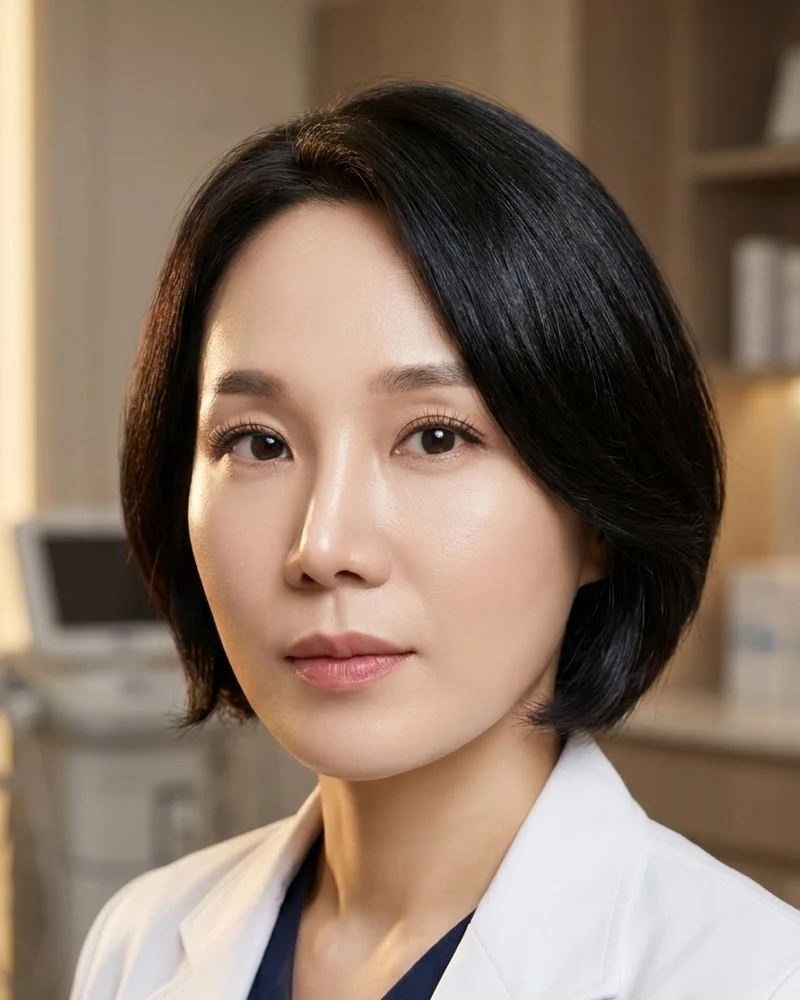
So that’s what worries you, right?
Yes.
Let me explain what doctors here actually worry about.
So should I still come?
Come. Just come knowing these five things.
When a patient flies in, a Korean doctor quietly worries about five things. Know them, and you become the patient we are happiest to see.
Short answer:
- Come. In 2025, 62.9% of Korea’s 2.01 million foreign patients were dermatology (skin) patients [1]. Korean skin clinics see many visitors.
- What doctors worry about is not skill. It is what happens next: the days after treatment, and the weeks after you fly home.
- So fill that gap before you come. Leave spare days, take records home, line up a doctor there.
What do Korean doctors quietly worry about?
1. Why can’t we see you in the days after?
Swelling, bruising, crusts and small lumps often appear days after a treatment, not on the day. A local patient just comes back. A visitor is at the airport.
2. What happens if something goes wrong at home?
British plastic surgeons, writing about surgery abroad in general (Turkey and similar destinations, not Korea in particular), note that “clinical and legal redress is much more difficult” once you are home, and that the cost “might well be down to the patient to pay” [2]. Korea does have a medical dispute agency that accepts foreigners [3], but using it from another country takes effort.
3. Will your doctor at home know what was done?
Botox units and areas, filler type and amount: without these, your next doctor is guessing. A US review found “surgeons and patients alike are often unprepared” for complications after patients return [4].
4. Did you really understand the consent?
The US CDC lists language barriers as a risk of medical travel [5]. In my experience, side-effect explanations shrink through an interpreter.
5. Is your flight deciding your recovery?
After major surgery, the CDC advises waiting 10 to 14 days before flying, because of blood clots [5]. That is for major surgery, not lasers or injections. Still, “I fly tomorrow” often changes what we do that day.
How often does it go wrong?
There is no Korean data yet: I found no study counting complications among foreign patients here.
The numbers we have are American: of 2,162 requests for CDC help in 2014–2024, 21 involved cosmetic procedures done while travelling, about 145 patients; 20 involved infection after surgery [6]. In a review of 214 Americans with complications from cosmetic surgery abroad, 82.7% had surgery in the Dominican Republic, mostly big operations like tummy tucks [4].
These numbers do not transfer to a Korean skin clinic. The pattern does: treated far away, trouble found at home.
Why do people still come?
- Experience. In 2025, 87.7% of foreign patient visits were to clinics, not hospitals, and 87.2% of patients were in Seoul [1].
- Price. The usual reason: it costs less than at home. I found no reliable official comparison, so no number.
- Speed and devices. Same-day treatment is common, and Korea makes many of its own devices. See Korean alternatives to Botox, Thermage and Ultherapy.
So come like this
- Bring photos and words for what you want. Where, what, and how much change. A photo survives translation.
- Find out what one trip can do. Some treatments take one visit. Others, like laser for dark spots or lifting, take several sessions over months. See pigmentation treatment on a short trip.
- Book treatment early in your trip. If it can leave crusts or bruises, keep days spare before flying.
- Take home a written summary in English of what was done — diagnosis, product names, units, areas, device names. The CDC advises the same [5].
- Get the explanation in your language. Korean law requires clinics registered for foreign patients to explain the diagnosis, side effects, expected cost and dispute process in a foreign language [7].
- Line up a doctor at home for follow-up care, as the CDC advises [5].
- Don’t let a package rush you. See how to find a non-factory clinic in Korea and does the laser machine name matter?
- Skip flights, saunas and swimming until wounds heal. This is my clinical judgement.
What I tell my patients from abroad
“Tell me your flight date first.” The date splits what we do today from what waits. And I write down everything I did, so your next doctor can read it.
I would still tell you to come. Just come the way I would send my own friend.
Have a question about your own trip? Ask me on LINE or by email — details on the Contact page.
FAQ
Is medical tourism in Korea safe?
I found no study counting complications among foreign patients in Korea. Anywhere, risk grows when no one can see you after treatment. Spare days and good records shrink that gap.
How soon can I fly after a treatment in Korea?
It depends on the treatment. After major surgery, the CDC advises waiting 10 to 14 days [5]. Lasers and injections usually need less, but ask the doctor for your date before the treatment.
Can I finish everything in one trip?
It depends. Some treatments take one visit. Many, like laser for dark spots or lifting, take several sessions. Before you book, ask: “What can we do in my dates?”
References
- Ministry of Health and Welfare, Korea. 2025 foreign patient figures, announced 24 Apr 2026. Reported by Kormedi, 24 Apr 2026 (in Korean). kormedi.com
- BAAPS and BOMSS. Joint BAAPS/BOMSS statement on surgical tourism: consult a UK surgeon first. 20 Apr 2023. baaps.org.uk
- Easy-to-find Korean Law (easylaw.go.kr). Faster, fairer relief for medical accident damage, 9 Apr 2012 (in Korean). easylaw.go.kr
- McAuliffe PB, Muss TEL, Desai AA, et al. Complications of aesthetic surgical tourism treated in the USA: a systematic review. Aesthetic Plast Surg 2023;47(1):455-464. 10.1007/s00266-022-03041-z (PMID 36315261)
- CDC Travelers’ Health. Medical tourism. Page last reviewed 1 Jun 2023. cdc.gov
- McNamara K, Rowh A, Stoney R, Perkins KM. Adverse outcomes of travel-related cosmetic procedures among US residents, 2014–2024. Emerg Infect Dis 2026;32(6):1003-1007. 10.3201/eid3206.251883
- Act on Supporting Overseas Expansion of Medical Services and Attraction of International Patients, Article 8. Korea Legislation Research Institute English translation (later amendments may not be reflected). elaw.klri.re.kr
Disclaimer: This guide is intended to help international visitors understand the Korean aesthetic medical system. I do not provide clinic recommendations or endorse specific facilities. Nothing here is personal medical advice, and decisions about your own care belong with a licensed doctor who has examined you.
14 years in practice · replies to messages herselfA doctor in Korea, in practice since 2012 — your K-Beauty Doc. Physician in non-surgical aesthetic medicine, practising in Ansan, South Korea. Every article here is written from clinical practice and the published literature. Not medical advice.
About the author · Contact